Documentation Index
Fetch the complete documentation index at: https://arize-ax.mintlify.dev/docs/llms.txt
Use this file to discover all available pages before exploring further.
What’s New
June 28, 2022
GraphQL Public API
The Arize GraphQL API offers a powerful interface for automating monitor setup, making bulk changes, and exporting configurations. It enables customers to integrate Arize with their internal systems for a repeatable and consistent setup. Use the API to:
-
Bulk create custom monitors with complex filters or baselines
-
Export existing monitor configuration, make edits, and bring edits back into Arize
-
Build automation by integrating Arize with internal services
Learn more about GraphQL here and get started with an example use case here.
Enhancements
June 6, 2022
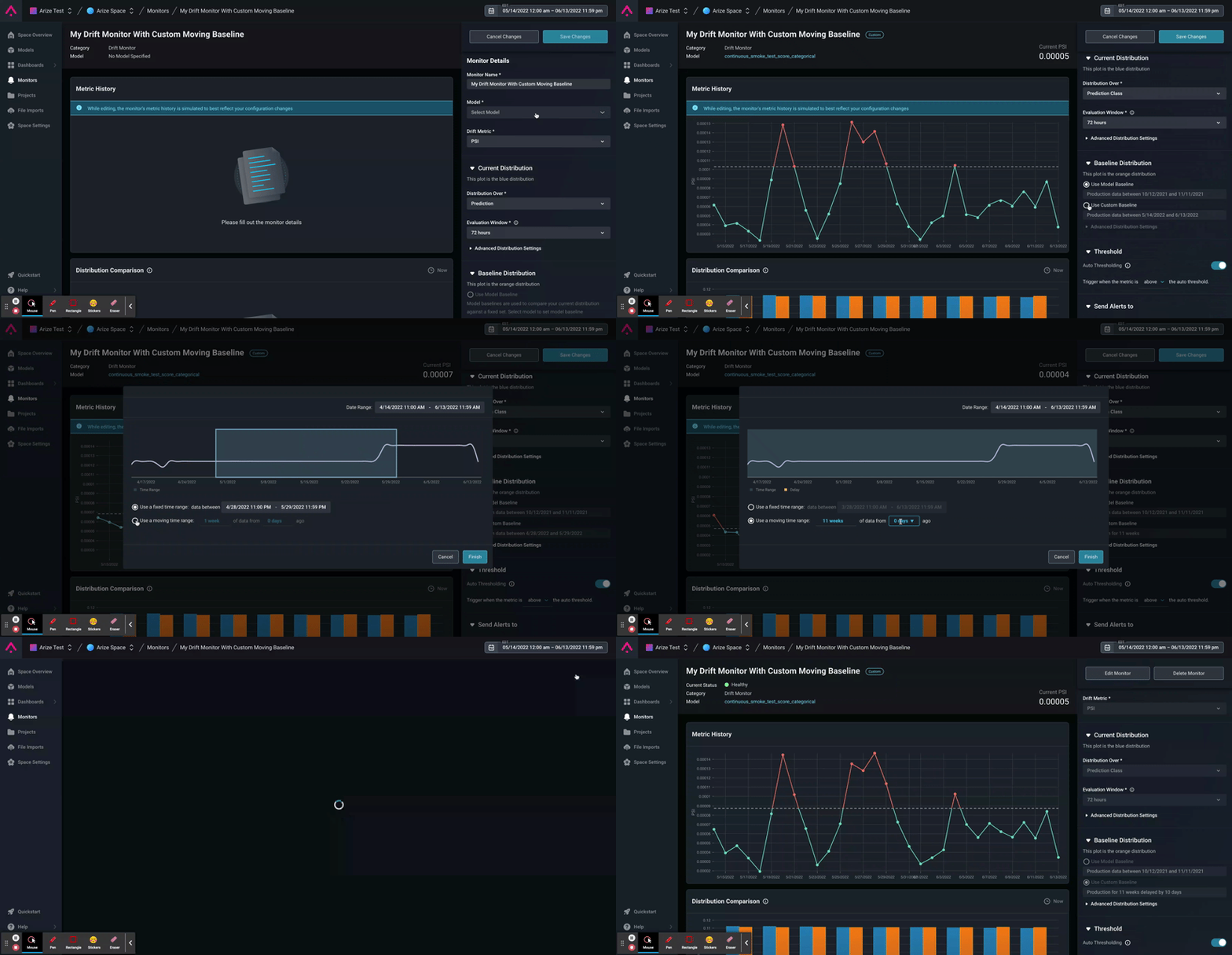
Moving Custom Baselines on Drift Monitors
Customize your drift monitor baseline to identify changes specific to your monitor with parameters such as a fixed time range, a moving time range, different versions, and specific filters.
Learn more about model baselines and how to choose a custom baseline here.
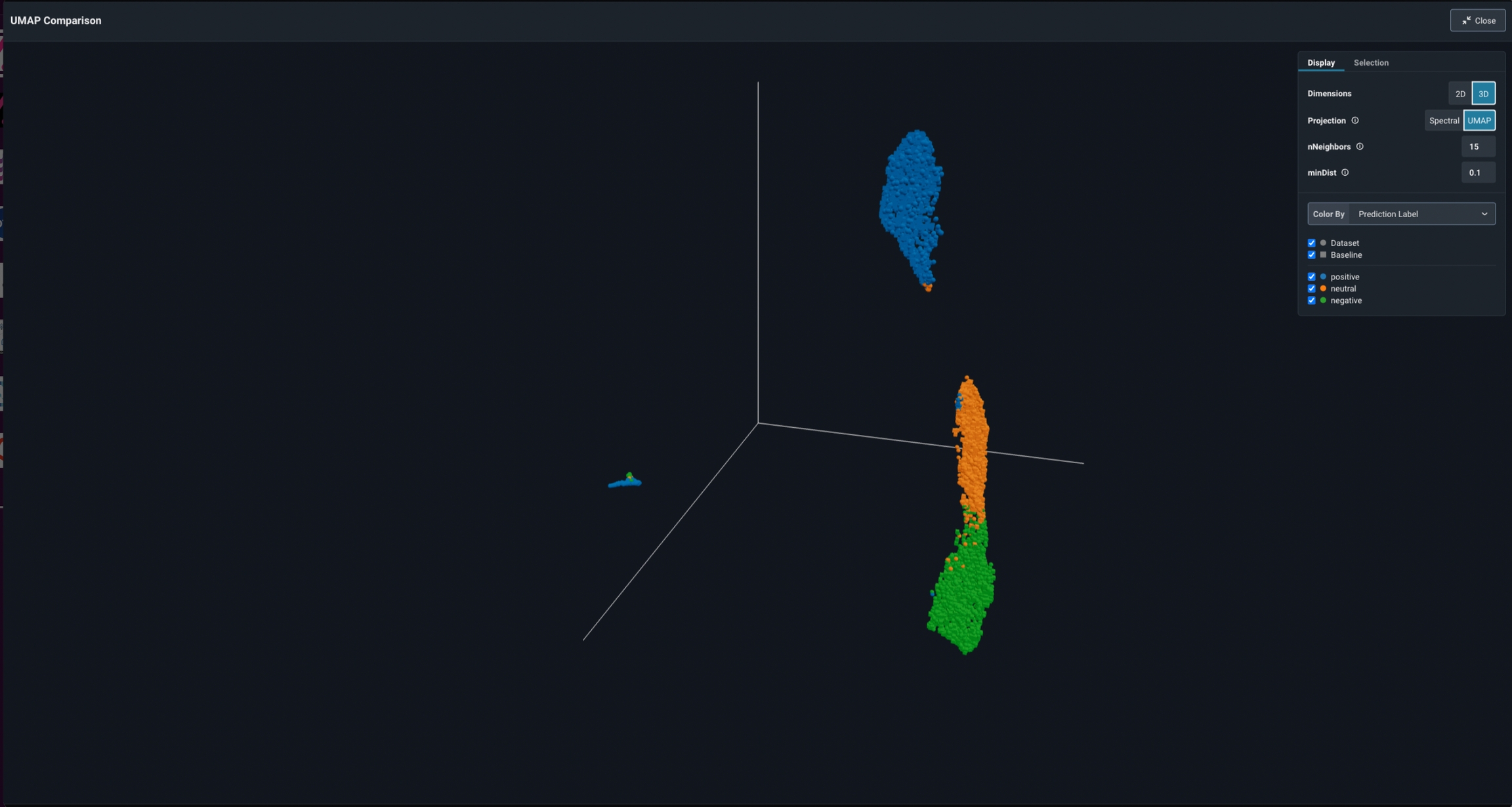
Color by Prediction Label
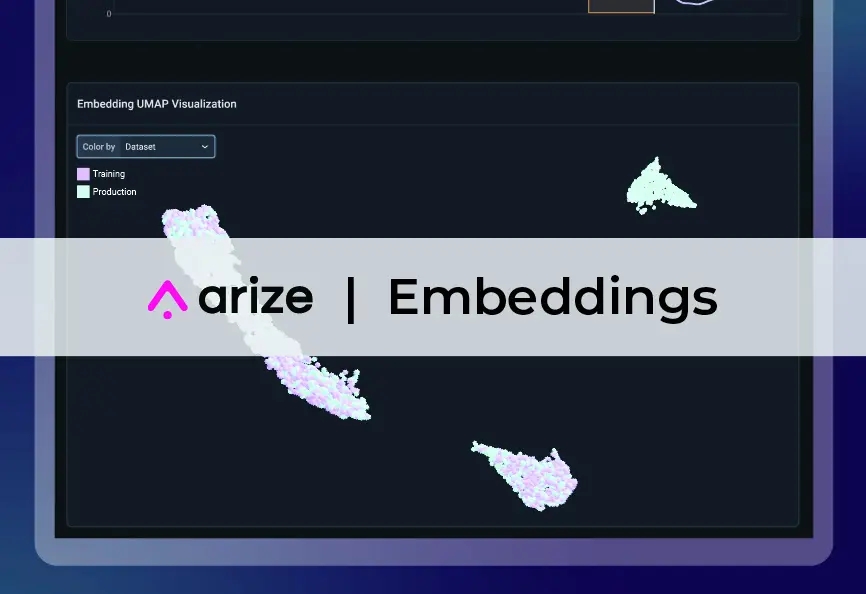
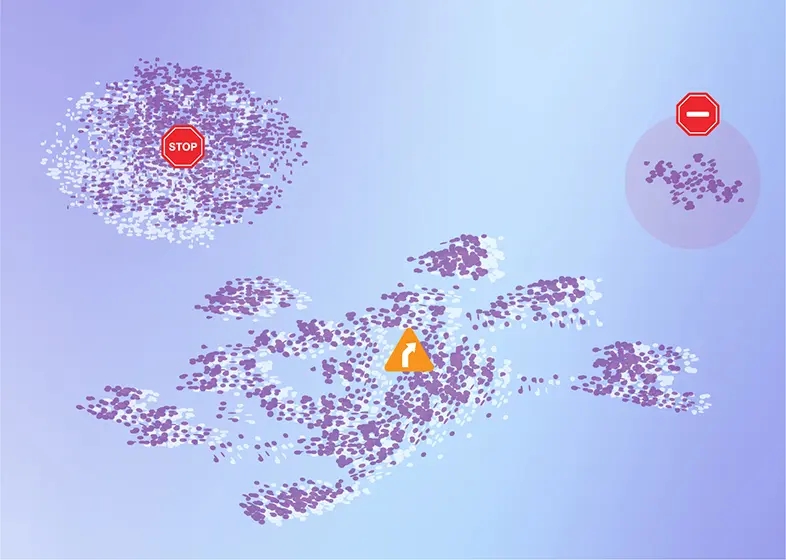
We’ve added an additional coloring option when troubleshooting embeddings using the 2D and 3D UMAP visualization. Users can choose between the ‘color by dataset’, or the new ‘color by prediction label’ option, enabling teams to better analyze their unstructured data.
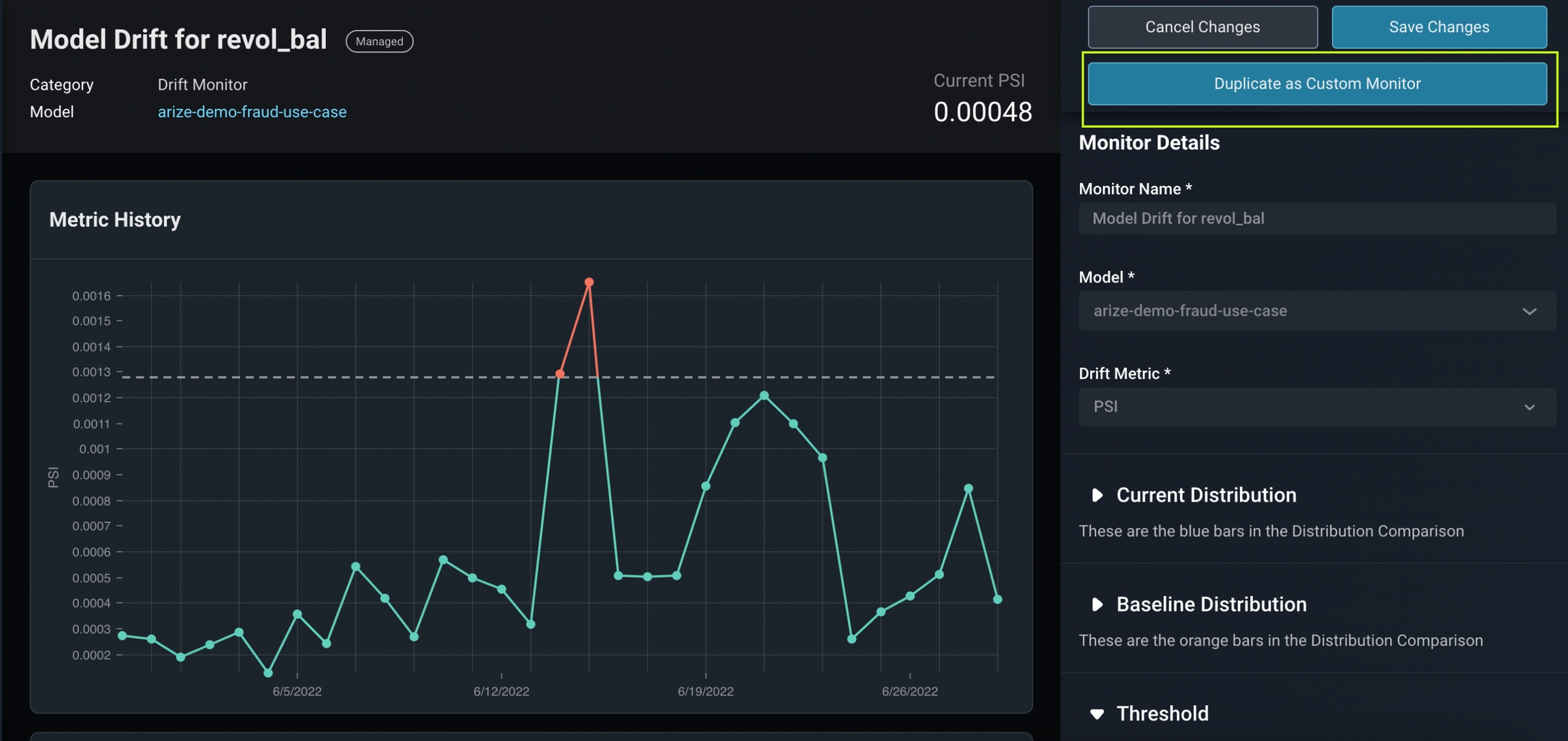
Duplicate Managed Monitor To Create Custom Monitor
Duplicate a pre-set (managed) monitor after the ‘Set Up Model’ flow to easily customize your monitor’s details. Use the duplicate model to choose an alternative baseline, edit your threshold value, add alert recipients, and more.
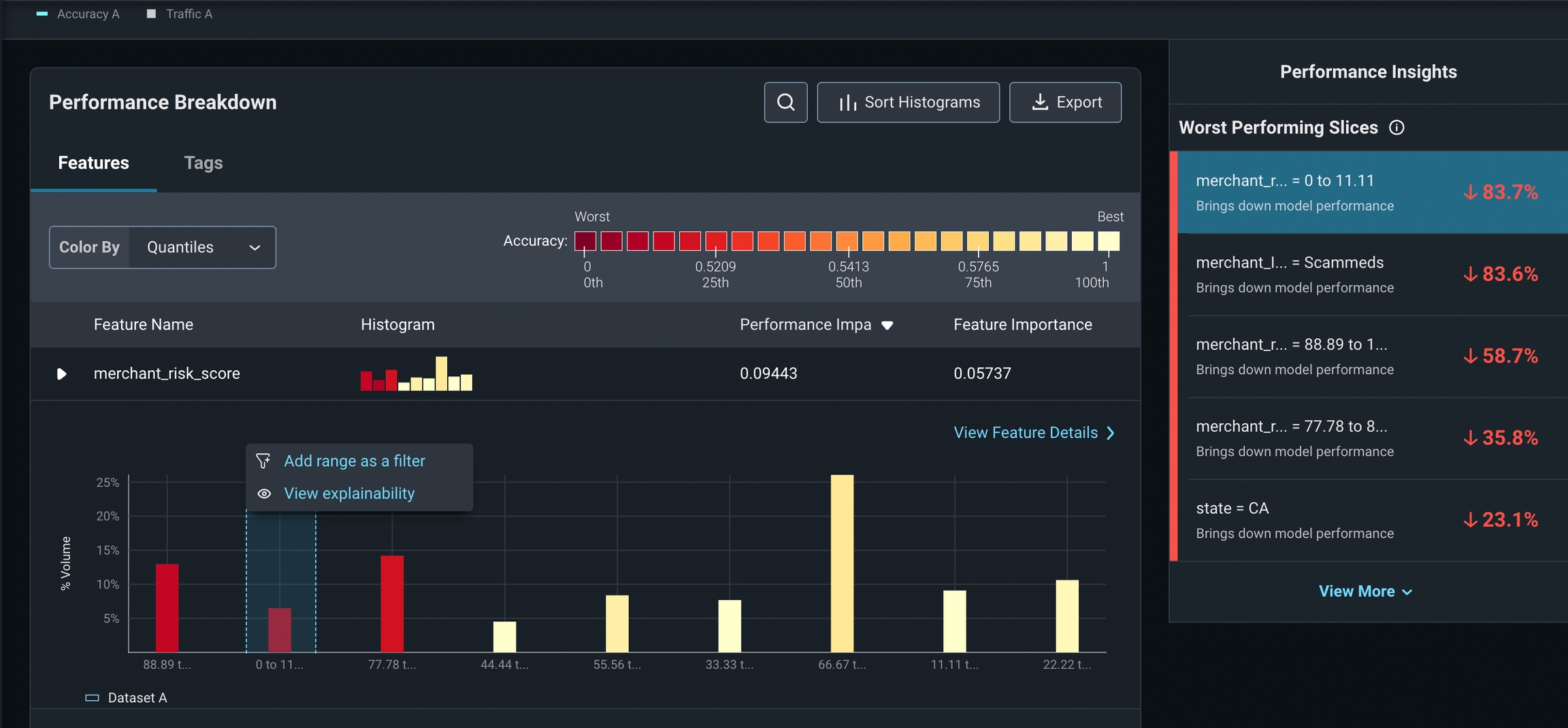
Performance Insights by Slice View
Arize users can now immediately identify their model’s worst-performing slices using our new Performance Impact panel, and understand the impact each slice has on their model at-a-glance. From the Performance Insights panel, users can click into their worst-performing slices to easily compare their slice’s performance to other feature slices for in-depth comparative analysis.
With automatically surfaced worst-performing slices, users can easily grok their most impactful slices for reduced time to resolution and improved model performance.
Learn more about performance tracing here.
Search By Feature Name
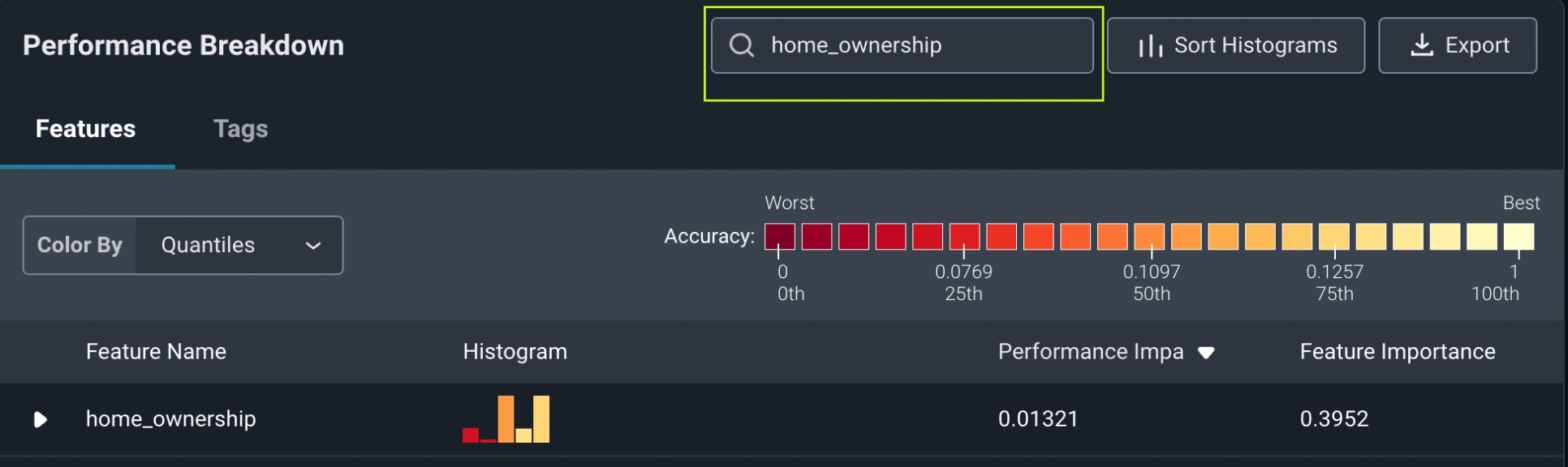
Surface features using the search bar located at the top right corner of your Performance Breakdown Chart to easily locate specific feature performance.
In the News
June 6, 2022
**America First Credit Union Case Study**
With ML observability in place to quickly detect and diagnose the root cause of model performance degradation, America First Credit Union’s ML team now ships AI with confidence. Learn more in our newest case study.
Monitor Unstructured Data With Arize
Arize AI is incredibly excited to debut our embedding drift monitoring and embedding analysis product! This release enables teams to log models with both structured and unstructured data to Arize for monitoring. By monitoring embeddings, teams can proactively identify when their unstructured data is drifting. Troubleshooting is simple with interactive visualizations to help isolate new or emerging patterns, underlying data changes, and data quality issues.
When AI Attacks Earnings
AI can power phenomenal revenue growth – until it doesn’t. That lesson is often learned the hard way when problematic AI systems are not caught and remedied before materially impacting revenue. Here are four steps enterprises can take to avoid their next earnings call becoming a retrospective on AI gone awry.
The Three Types of Observability Your System Needs
Did you know that there are not one, not two, but three types of observability your system could need? In this piece, Arize CPO, Aparna Dhinakaran, and Bigeye co-founder & CEO, Kyle Kirwan, walk through the different types of observability and how you should use them.
The Modern ML Pipeline With Arize and Kafka
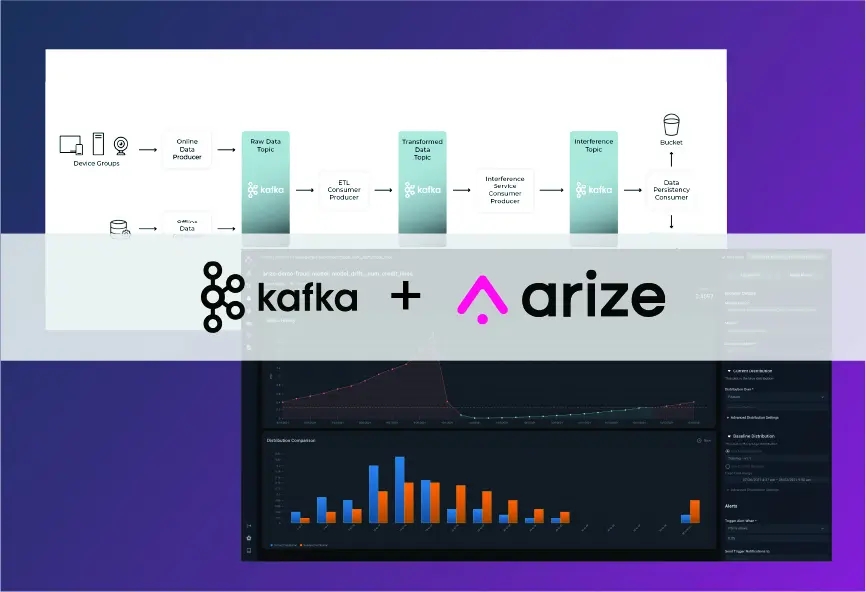
Arize Founding Engineer and Head of Global Solutions Architecture, Gabe Barcelos, shows how you can quickly integrate Arize into your existing pipeline for real-time and scalable ML observability. This article dives into leveraging a simple Kafka consumer which consumes a micro-batch of incoming events and publishes them to Arize so you can observe your model in real-time.
Can Reinforcement Learning Help Fix the Mental Health Crisis?
Stefano Goria is the Co-Founder and Chief Technical Officer (CTO) of Thymia, a company aiming to make mental health assessments faster and more accurate through an approach that combines video games based on neuropsychology with analyses of facial microexpressions and speech patterns. In this wide-ranging Q&A, Goria talks about the company’s AI strategy, subjectivity and biases in mental health data, and the unique ethical concerns of applying AI in the mental health field.
Introducing the Arize Trust Center
Introducing the Arize Trust Center: an interactive resource designed to help both current and potential customers and partners understand our governance, policies, and security. Learn more about what trust at Arize means and Arize’s security pillars with Remi Cattaiu, CISO in our newest blog post. Read more.
Interact with the Trust Center here.
Clearcover Accelerates Model Velocity, Navigates Feature Drift, and Drives Confidence In Deployed Models
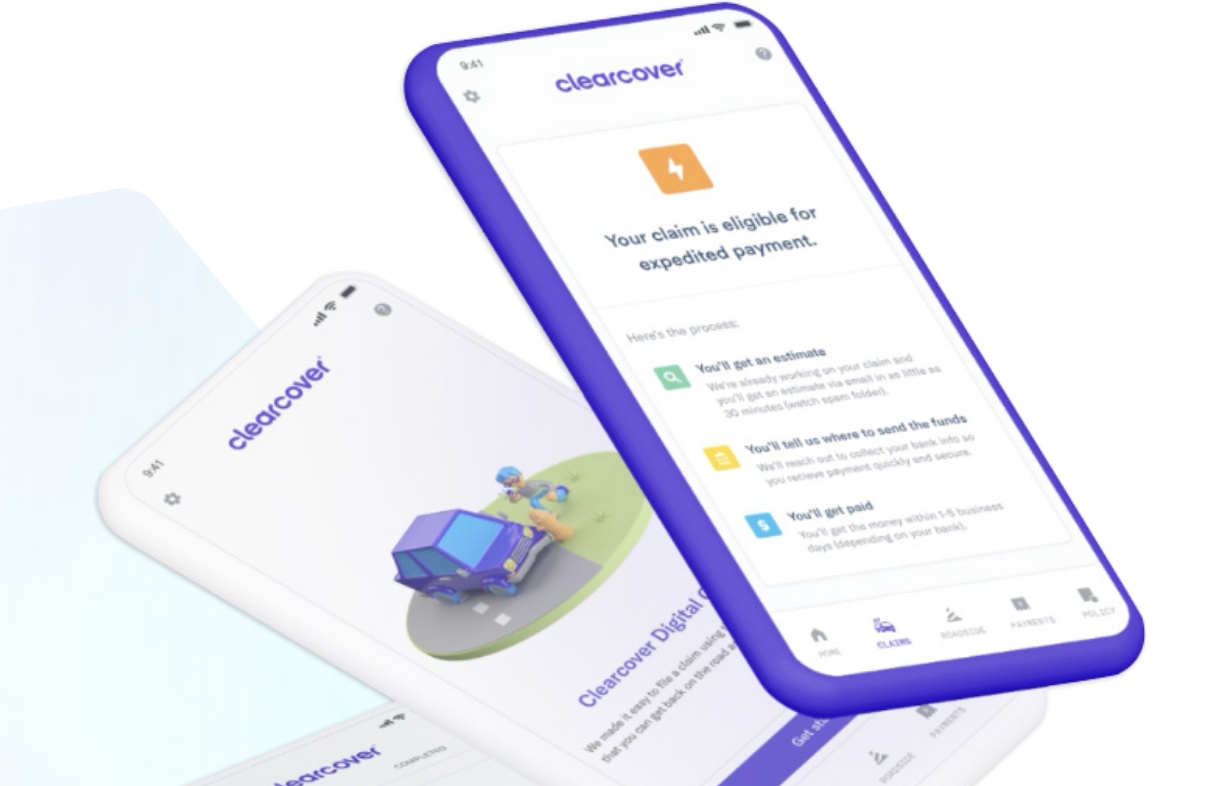
The machine learning team behind Clearcover Insurance Company’s award-winning app and the fastest claims in auto insurance moves to real-time models after implementing Arize’s ML observability platform. Learn how Clearcover is achieving improved model performance and significant time savings using Arize AI in our newest case study. Read more.
Getting Started With Embeddings Is Easier Than You Think
Contrary to popular belief, machine learning is math, not magic. At some point in your ML journey, you’ll need some way to “explain” your model’s similarities and differences between queries. The question is: how do you do that?
Enter embeddings. In our latest blog post, Arize Data Scientist Francisco Castillo in collaboration with Chief Product Officer Aparna Dhinakaran gives a crash course on embeddings 101! Learn More.