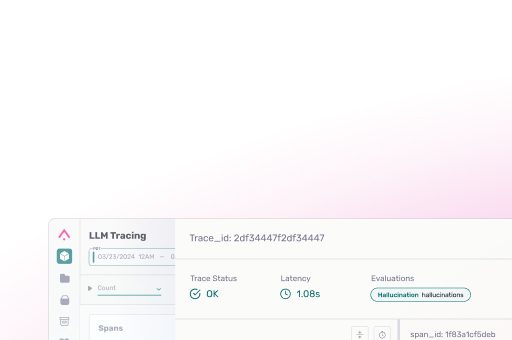



In their recent essay making the rounds, Foundation Capital’s Jaya Gupta and Ashu Garg argue that the next enterprise data advantage will come from capturing decision traces and stitching them into a queryable context graph. In their framing, retaining why your agents took action is as important as recording what they did.
Our Take On Context Graphs
As we read Jaya’s article on context graphs and decision traces, it strongly resonates with what we are observing empirically across the industry. From our vantage point, we have visibility into thousands of agents deployed across hundreds of teams. These agents operate over continuously changing inputs: novel data, ad hoc questions, unstructured discussions, and evolving business constraints. Each execution produces a unique analysis or action grounded in business reasoning, rather than static rules.
In practice, these agents bridge legacy structured systems with human-generated context. They synthesize data from systems of record with free form analytical intent expressed in natural language, and convert that synthesis into decisions and downstream actions. This is already happening at scale.
When we look forward, we focus less on speculative architectures and more on emergent patterns that are already proving disruptive. Cursor is a clear example. Cursor represents a new agent-centric business pattern in software development: a tightly integrated agent operating across heterogeneous systems such as GitHub repositories, Kubernetes logs, CSV files, application logs, and version history. The agent reasons over this disparate data plane to generate code, debug failures, trace regressions across commits, and even produce its own diagnostic artifacts. Importantly, this is not just retrieval, it is execution-time synthesis and reasoning across systems.
The natural question is whether this pattern generalizes beyond software development. In domains like DevOps, SecOps, and RevOps, we are already seeing companies built agent-first. These agents consume data from traditional systems of record, but they also rely heavily on previously underutilized data sources such as Slack threads, emails, tickets, and ad hoc human conversations. In terms of value creation, these agent platforms have the potential to displace traditional systems of record, not by replacing them outright, but by becoming the primary locus where decisions are formed and executed.
Agent Inputs and Outputs
This shift raises a fundamental question: what data do agents act on, and what new data do they generate?
We see two primary categories:
- Agent inputs: human prompts, unstructured documents, APIs from existing systems, databases, file systems, and other contextual artifacts available at execution time.
- Agent outputs and actions: generated reasoning, intermediate and final outputs, tool invocations, actions taken, and, critically, the justification for those actions.
Implications
It is still unclear who will ultimately control this data layer. What is clear, however, is how organizations are already treating it. Agent traces are not viewed as ephemeral telemetry. Unlike traditional observability data (e.g., logs and metrics designed primarily for debugging infrastructure), agent traces are treated as durable business artifacts. Customers want to retain them, analyze them, and feed them back into downstream systems. Increasingly, they want these traces written back into their data lakes in standard, interoperable formats. Arize’s database data fabric was explicitly designed in response to this requirement.
These outputs are already being used to close feedback loops. Generated reasoning, combined with human annotations and evaluations, is used to iteratively improve system prompts and agent behavior. Today, these loops are largely human in the loop. Over time, that constraint will loosen. Agents will increasingly evaluate prior decisions and reasoning traces to inform future behavior. This is a fundamentally different data pattern than traditional systems of record, which capture state but not rationale.
Business reasoning itself becomes a first-class asset.
Looking ahead, several open questions remain. Will vertical agent platforms own and control this reasoning data, or will AI infrastructure providers emerge as the canonical layer and if so who in this layer benefits? What will the dominant datastore interfaces look like for this new class of data? Will access patterns favor file systems and grep like parallel search over reasoning data, or vectorized representations optimized for semantic recall (early signals suggest file centric architectures have significant momentum and vector databases are not providing the right interface)? And finally, when will tools like Cursor expose historical decision and discussion threads as reusable context within the agent itself?
These questions will determine not just who captures value, but what the next generation of systems of record ultimately becomes.