Drift is defined as the change in the data over time. It also means the change in the properties of the target variable, due to unpredictable or unforeseen changes, over the due course of time. Data drift can be described as the change in the distribution of data, between the real-time data and the baseline data that was predicted or set beforehand. Concept drift is the change between the relationship between input and the output given in any situation. Drift can be in any form. It can be gradual, recurring, or sudden. It can be a positive or negative drift. The change in data over time can affect model outcomes, making drift an important metric to monitor when it comes to model performance.
Build better agents with Arize
Trace, evaluate, and learn. Build agents that work with Arize AX and start tracing your runs today.
Prefer open source? Try Arize Phoenix for self-hosted, open source agent observability.
Key takeaways
- Drift is an umbrella term for production behavior diverging from the baseline used to train or validate a model.
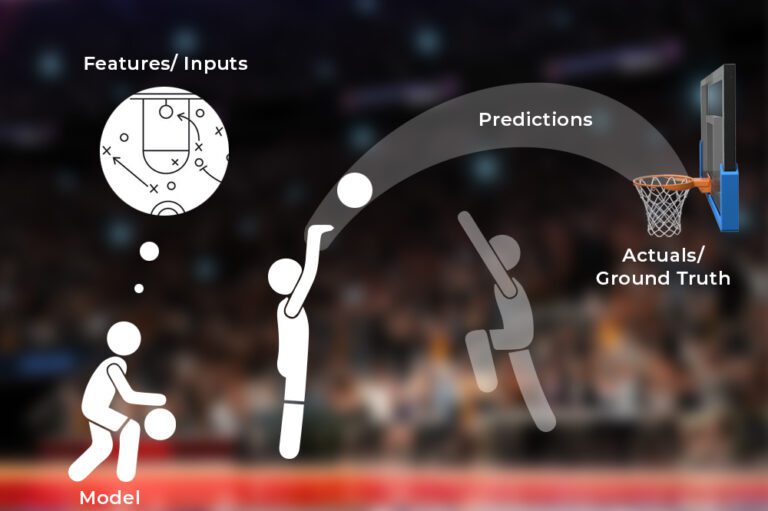
- Data drift shifts inputs; concept drift shifts labels; prediction drift shifts model outputs.
- Drift can be sudden, gradual, or seasonal; each pattern needs different runbooks.
- Monitoring combines distribution comparisons, performance metrics, and slice analysis.
- Not every drift alert requires retrain; confirm label pipelines and thresholds first.
Major drift categories
Data drift changes feature distributions or correlations. Examples: new user segments, sensor calibration drift, new categorical levels.
Concept drift changes the mapping from inputs to correct labels. Examples: fraud pattern evolution, changing regulations, new competitor behavior affecting conversion.
Prediction drift changes model scores or class rates even when inputs seem stable. Causes include model version swaps, threshold edits, or upstream score scaling bugs.
Label drift changes the distribution of ground truth without necessarily changing features or the model. Often a data pipeline or definition issue.
Teams that conflate these types chase the wrong fix. Separate dashboards and alert names reduce confusion.
Drift shapes over time
Sudden step changes after launches or incidents.
Gradual erosion as behavior slowly moves away from training.
Recurring cycles tied to calendar events.
Virtual drift from label redefinitions without world change.
Positive drift (metrics improve) still deserves investigation; it may indicate leakage or measurement bugs.
Prioritizing drift signals
Rank alerts by feature importance times drift magnitude when triage bandwidth is limited. A small shift on a high-importance credit utilization field outranks a large shift on a decorative UI theme flag.
Attach deploy markers and config change events to drift charts so sudden steps correlate with known releases instead of mystery investigations.
Monitoring stack
- Freeze reference windows for features, scores, and labels.
- Compute current window statistics on the same bin edges.
- Rank features by importance times drift magnitude when prioritizing triage.
- Backtest alerts against historical incidents to tune thresholds.
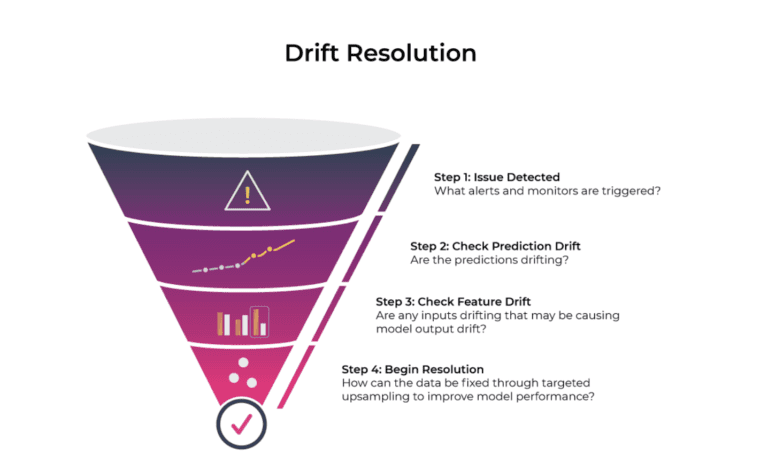
Articles on model, concept, and data drift walk through practical triage when multiple monitors fire at once.
Lifecycle resources on AI model lifecycle management connect drift detection to retraining and validation gates.
For text models, combine embedding monitors with cohort performance views inspired by NLP sentiment classification monitoring.
Response patterns
Validate logging and featurization before retraining.
Slice failures to find affected cohorts.
For data drift with stable labels, refresh training data or apply importance weighting.
For concept drift, update labels and retrain or adjust decision policies.
For prediction drift from deployment changes, roll back or realign thresholds.
Failure modes
Alert fatigue from uncalibrated PSI thresholds.
Retraining on mislabeled recent data.
Ignoring correlation drift while marginals look stable.
Using global metrics while only one region drifts.
Schedule seasonal baseline reviews so expected holiday or tax-season shifts do not page on-call engineers every year for the same calendar pattern.
FAQ
Is drift always bad?
Not necessarily. Seasonal shifts are expected. The question is whether the model still meets business requirements on recent labels.
How is drift different from model staleness?
Staleness is informal aging. Drift refers to measurable distributional or relational change versus a baseline.
Can LLM apps experience drift?
Yes, in prompt mix, tool outputs, retrieval corpora, and rubric scores on golden tasks. Trace evals detect regressions.
How big should my monitoring window be?
Balance stability (enough samples) with timeliness. High-volume models use shorter windows; low-volume need longer spans.
Should drift trigger automatic retrain?
Usually no. Automate investigation and performance checks; keep retrain decisions human-gated with documented criteria.