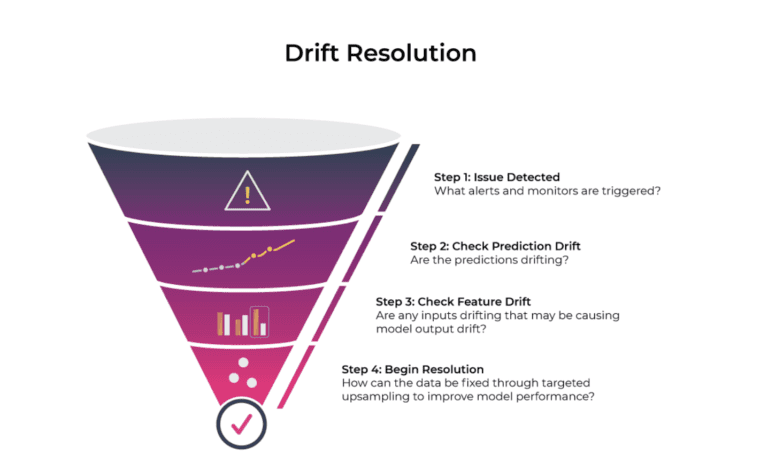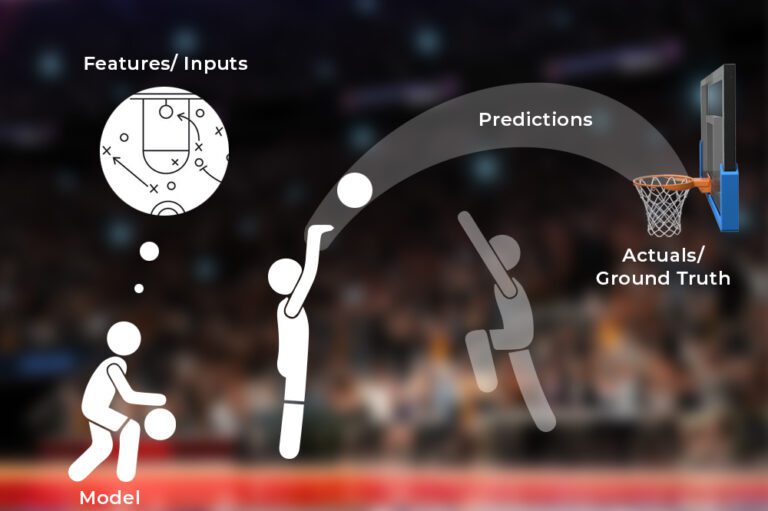

Feature drift, data drift, covariate drift and input drift all refer to a shift in the statistical properties of the independent variable(s), i.e. a drift in the feature distributions and the correlations between variables. This drift can result in data changes due to seasonality, consumer preferences, the addition of new products or other factors. Monitoring feature drift tells you when live inputs diverge from the reference sample your model learned, before accuracy collapses on delayed labels.
Build better agents with Arize
Trace, evaluate, and learn. Build agents that work with Arize AX and start tracing your runs today.
Prefer open source? Try Arize Phoenix for self-hosted, open source agent observability.
Key takeaways
- Feature drift is change in input distributions P(x) or correlations between features in production.
- Univariate PSI per column is a starting point; correlation drift needs pairwise or embedding monitors.
- New categorical levels and rising missing rates are drift signals even when numeric means look stable.
- Prioritize high-importance features when triaging alerts.
- Feature drift does not always require retrain; validate labels and pipelines first.
What to monitor
Marginal distributions for numeric and categorical columns with fixed bin edges from training.
Missingness and default rates when imputation masks upstream bugs.
Cardinality for strings and enums; sudden new levels break one-hot encoders.
Correlation shifts between top feature pairs or PCA subspace angles.
Text-derived stats such as length, language, and token counts for NLP routes.
Causes in production
Marketing and product changes alter user mix. Seasonality shifts spend patterns. New SKUs introduce unseen categories. Sensor firmware changes measurement scale. ETL mistakes duplicate or drop fields. Adversaries probe input space in fraud systems.
LLM apps drift in prompt templates, attached files, and tool JSON shapes feeding downstream classifiers.
Detection workflow
- Snapshot reference histograms at train or validation time.
- On schedule, histogram current production with identical bins.
- Compute PSI or similar per feature; rank by importance times drift score.
- Open incidents on top movers; attach bin-level diff charts.
Articles on model, concept, and data drift separate feature drift from concept drift when deciding response.
Operational playbooks in AI model lifecycle management link drift monitors to retraining triggers.
Text classification teams add sentiment and language cohort charts as in NLP sentiment classification monitoring.
Response options
Hotfix featurizers for schema bugs before retraining.
Reject or bucket unseen category levels with explicit fallback behavior.
Retrain on recent data when labels remain valid and performance drops on slices.
Apply importance weighting or domain adaptation when full retrain is slow.
Failure modes
Alert storms from tiny PSI thresholds on low-volume bins.
Monitoring only means while variance and tails shift.
Ignoring correlation drift because each marginal looks fine.
Retraining without fixing logging bugs, encoding stale drift into weights.
Embedding-derived features
When pipelines feed cluster ids or retrieval scores as columns, monitor those derived fields with the same PSI machinery as raw tabular inputs.
Text statistics (length, language probabilities) cheaply proxy embedding drift before running heavy vector jobs.
Coordinating with featurization owners
Drift alerts should route to owners of upstream SQL or stream jobs, not only model owners. Many incidents are ETL timezone bugs, not retrain cases.
Maintain a runbook link from each high-importance feature monitor to its featurization repo and on-call rotation.
Practitioner checklist
Before changing production settings, confirm labels, thresholds, and monitor windows match the definitions used in your last offline eval. Snapshot dashboards when incidents start so postmortems compare apples to apples.
Run slice-level reviews on high-traffic cohorts weekly even when global metrics look flat. Many failures appear first in one locale, product line, or prompt route.
Document model version, featurizer hash, and data window in every incident ticket. Future you needs that context to interpret drift charts.
When metrics disagree (offline vs online, precision vs recall), write down the business cost of each error type before picking a fix. Metrics are proxies; costs are the decision.
Share eval harness links in release notes so support and PM teams know which golden tasks must pass before they announce improvements.
FAQ
Is feature drift the same as data drift?
In most ML ops language, yes. Feature drift emphasizes columns used as model inputs.
How is feature drift different from concept drift?
Feature drift changes inputs. Concept drift changes the correct label for similar inputs.
Should I monitor raw or engineered features?
Both when feasible. Bugs often appear in engineered columns first; raw logs help root cause.
How do embeddings fit feature drift?
Treat embedding clusters or retrieval scores as derived features with their own monitors.
When should feature drift block serving?
When policy mandates human review above drift thresholds on safety-critical features, or when featurization is known broken.