The Evaluator
Your go-to blog for insights on AI observability and evaluation.
Showing 111–120 of 458 posts (page 12 of 46)

AWS Bedrock AgentCore Observability with Arize AX: Operationalizing AI Agents At Scale
Building an AI agent in a notebook is straightforward. Getting that agent to run reliably at scale is a different challenge entirely. Most teams hit the same production walls: agents that work locally fail when traffic spikes, debugging production issues takes days without proper traces, and managing infrastructure becomes a constant distraction from improving the…
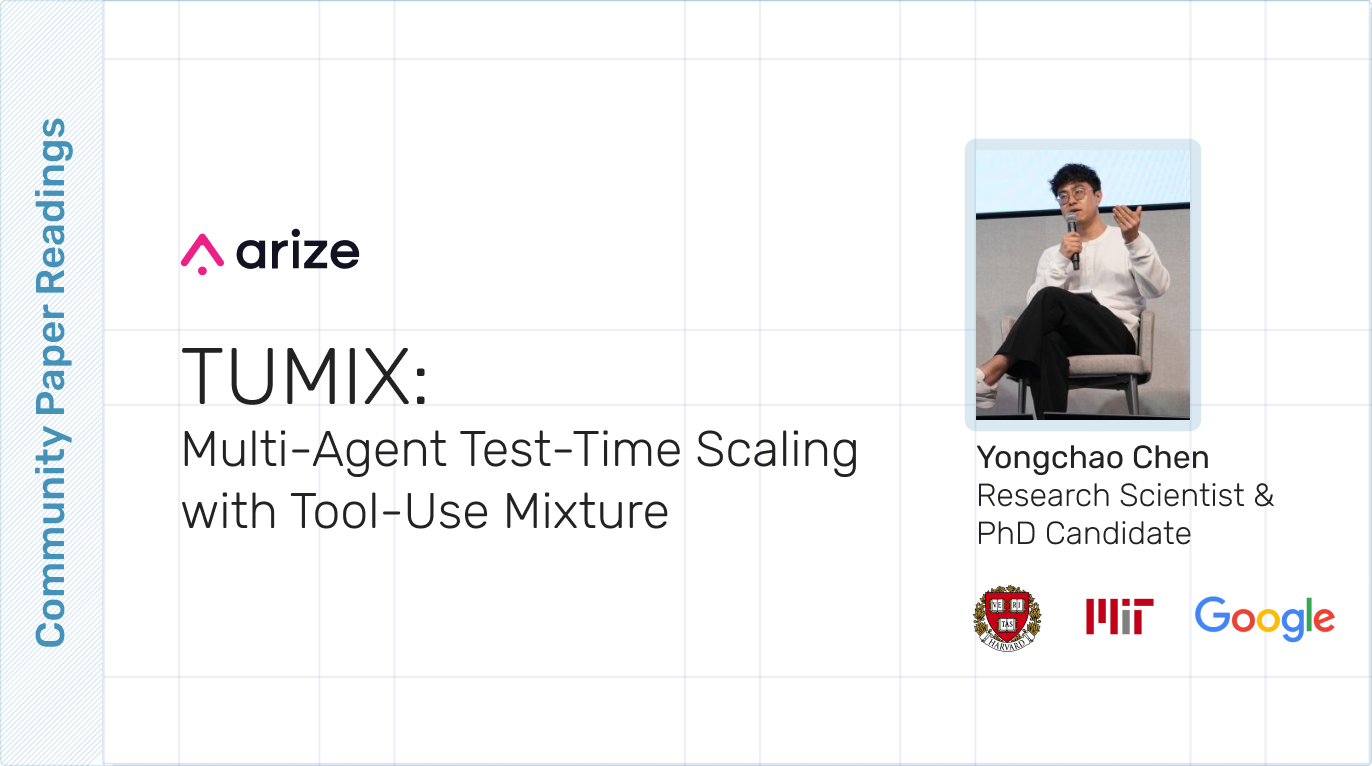
Google TUMIX AI Agent Paper, Explained By Its Author
In our latest paper reading, we had the pleasure of featuring Yongchao Chen — a Research Scientist Intern at Google and PhD candidate at MIT and Harvard. He covered his groundbreaking paper “TUMIX: Multi-Agent Test-Time Scaling with Tool-Use Mixture.” The paper proposes Tool-Use Mixture (TUMIX), an ensemble framework that runs multiple agents in parallel, each…

CLAUDE.md Best Practices for Claude Code
In our last post on Prompt Learning (our prompt optimization feature), we optimized Cline, a powerful coding agent, through its system prompt. This time, we used it on one that more of you are probably familiar with – Claude Code – and saw some awesome results. Claude Code is considered one of the best coding…
Sign up for our newsletter, The Evaluator — and stay in the know with updates and new resources:
How To Improve AI Agent Security with Microsoft’s AI Red Teaming Agent in Microsoft Foundry
Building safe AI isn’t optional anymore. Every model deployed to production faces adversarial users trying to make it behave badly. Microsoft Foundry gives you automated red teaming – essentially a tireless attacker probing your system for weaknesses. But finding vulnerabilities is only half the battle. You need to understand exactly which attacks breach your systems…
Evaluating and Improving AI Agents at Scale with Microsoft Foundry
The Case for Continuous AI Quality As generative and agentic systems mature, the question for enterprises is no longer simply “can we build it?” It is “can we trust it?”. Production-ready AI must not only perform, but also behave responsibly. When large-language models generate content, reason across multiple steps, or act through tools, organizations need…
GEPA vs Prompt Learning: Benchmarking Different Prompt Optimization Approaches
In June 2025, Andrej Karpathy introduced Software 3.0: the notion that software development is shifting from programming through code to prompting through natural language. When building programs, the goal is to define exactly who, what, where, when, and why for your architecture. One reason agents are powerful is because we can use prompts, in natural…
Tracing, Evaluation, and Observability for Google ADK (How To)
Multi-agent systems are moving from research prototypes to production deployments. But there’s a gap between “it works in the demo” and “it works reliably at scale.” Google’s Agent Development Kit (ADK) handles the orchestration complexity, while Arize AX can provide the observability needed to understand and optimize agent behavior in production. This post walks through…
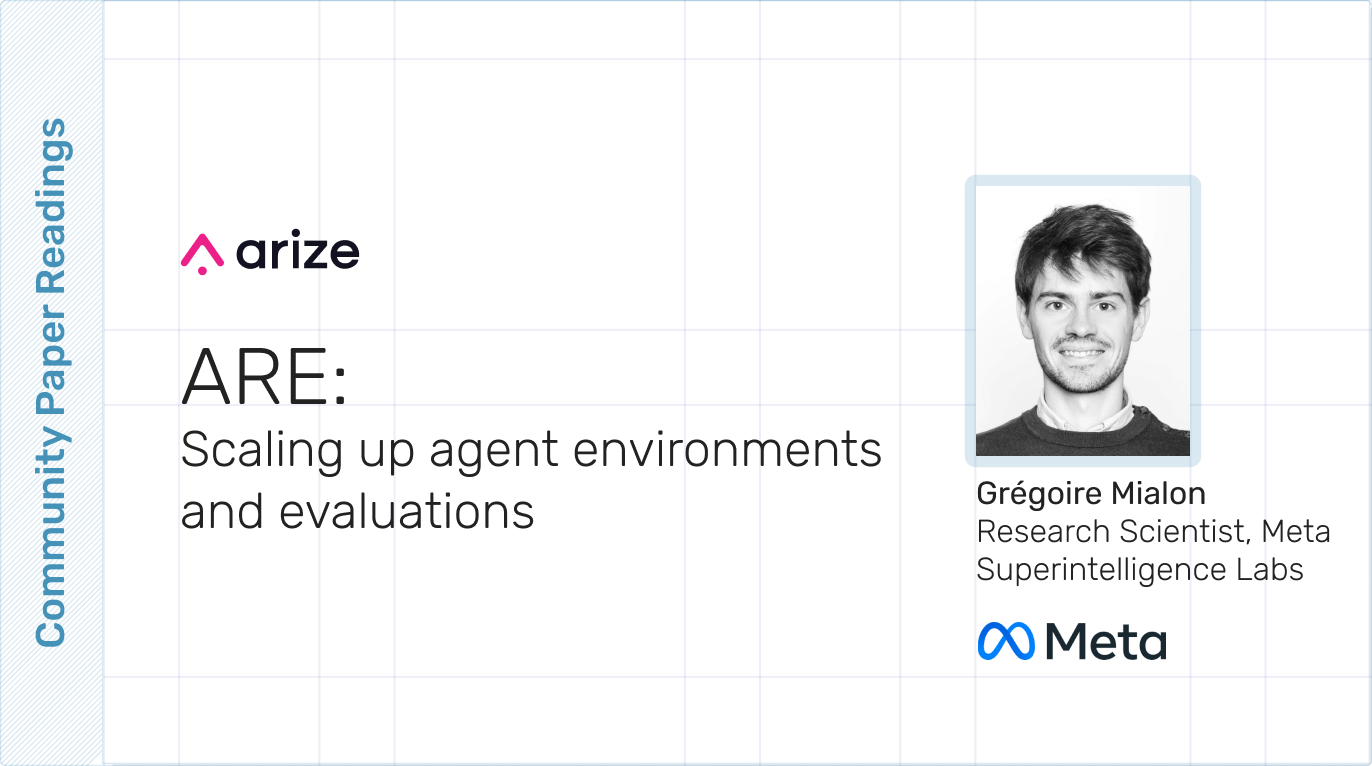
Meta AI Researcher Explains ARE and Gaia2: Scaling Up Agent Environments and Evaluations
In our latest paper reading, we had the pleasure of hosting Grégoire Mialon — Research Scientist at Meta Superintelligence Labs — to walk us through Meta AI’s groundbreaking paper titled “ARE: scaling up agent environments and evaluations.” Context on the Paper Meta’s new ARE (Agents Research Environments) is a platform for building time-driven worlds where…
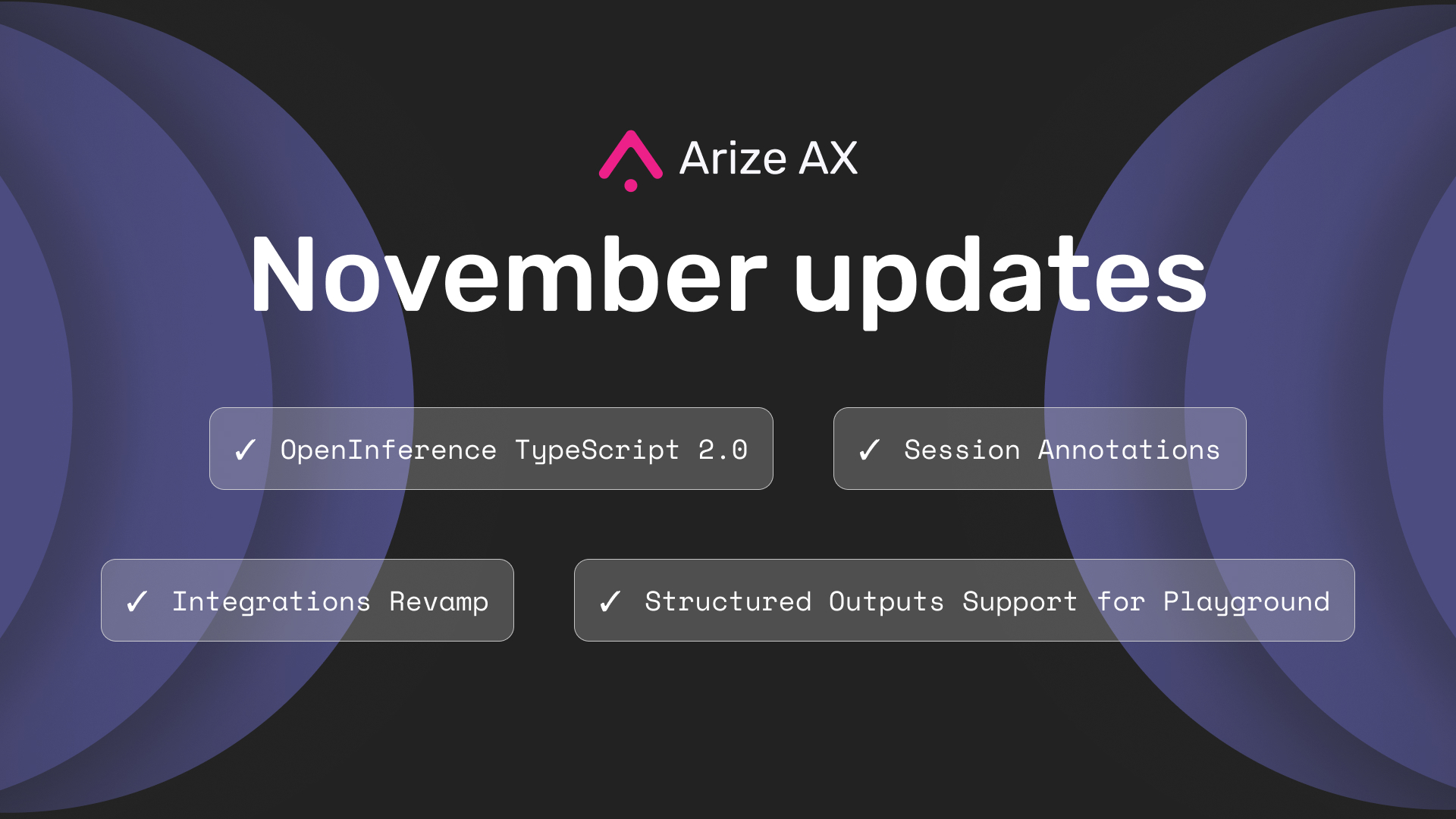
New In Arize AX: Tags, Data Fabric, Automatic Threshold Ranges for Monitors and More
October of 2025 was a crowded month for shipping new features in Arize AX, with updates to make AI agent engineering easier. From a new timeline tab for traces to data fabric, there is a lot to catch up on and try out. Tags Tags are a lightweight way for you to organize and label…
Hyland’s Approach To AI Agent Engineering
Hyland’s AI agent stack pairs Hyland Agent Builder with agentic document processing to bring context-aware agents to core platforms like Onbase, Alfresco, and Nuxeo — turning document understanding into real actions. Given the company serves thousands of enterprises, including over half of the Fortune 100, reliability is essential. In building agents, “determinism is greater than…