The Evaluator
Your go-to blog for insights on AI observability and evaluation.
Showing 151–160 of 458 posts (page 16 of 46)
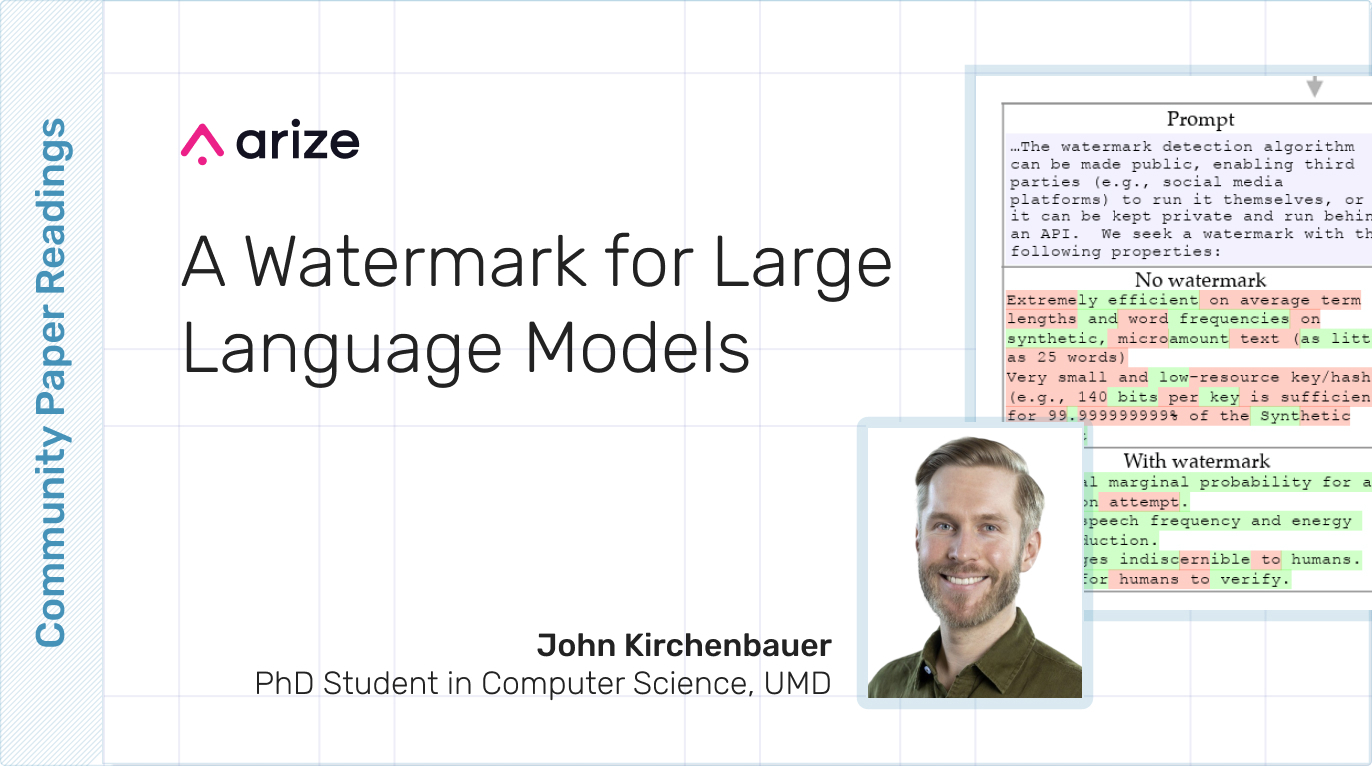
A Watermark for Large Language Models
In our latest live AI research papers community reading, the primary author of the popular paper A Watermark For Large Language Models (John Kirchenbauer of University of Maryland) walked us through the thinking behind the paper, technical approach, and key takeaways. The paper’s proposed watermark can be embedded with negligible impact on text quality, and…

Unlocking Safer AI: Your Two-Part Field Guide
Large language models are reshaping how we build products — and how adversaries try to break them. To help teams stay ahead, Sofia Jakovcevic — AI Solutions Engineer at Arize AI and an alumna of OpenAI — wrote this two-part guide on how jailbreaks really work and how modern guardrails can shut them down. Skim…

LLM Observability for AI Agents and Applications
The era of single-turn LLM calls is behind us. Today’s AI products are powered by increasingly autonomous agents — multi-step systems that plan, reason, use tools, and adapt in real time — or by complex applications built from chained prompts, retrieval pipelines, and external APIs. These systems are dynamic and stateful. Since they handle memory,…
Sign up for our newsletter, The Evaluator — and stay in the know with updates and new resources:
Prompt Learning: Using English Feedback to Optimize LLM Systems
Applications of reinforcement learning (RL) in AI model building has been a growing topic over the past few months. From Deepseek models incorporating RL mechanics into their training processes to other success stories of RL-based improvement, “AI Twitter” has been ablaze. As more agents get deployed, a question emerges: can reinforcement learning control systems be…
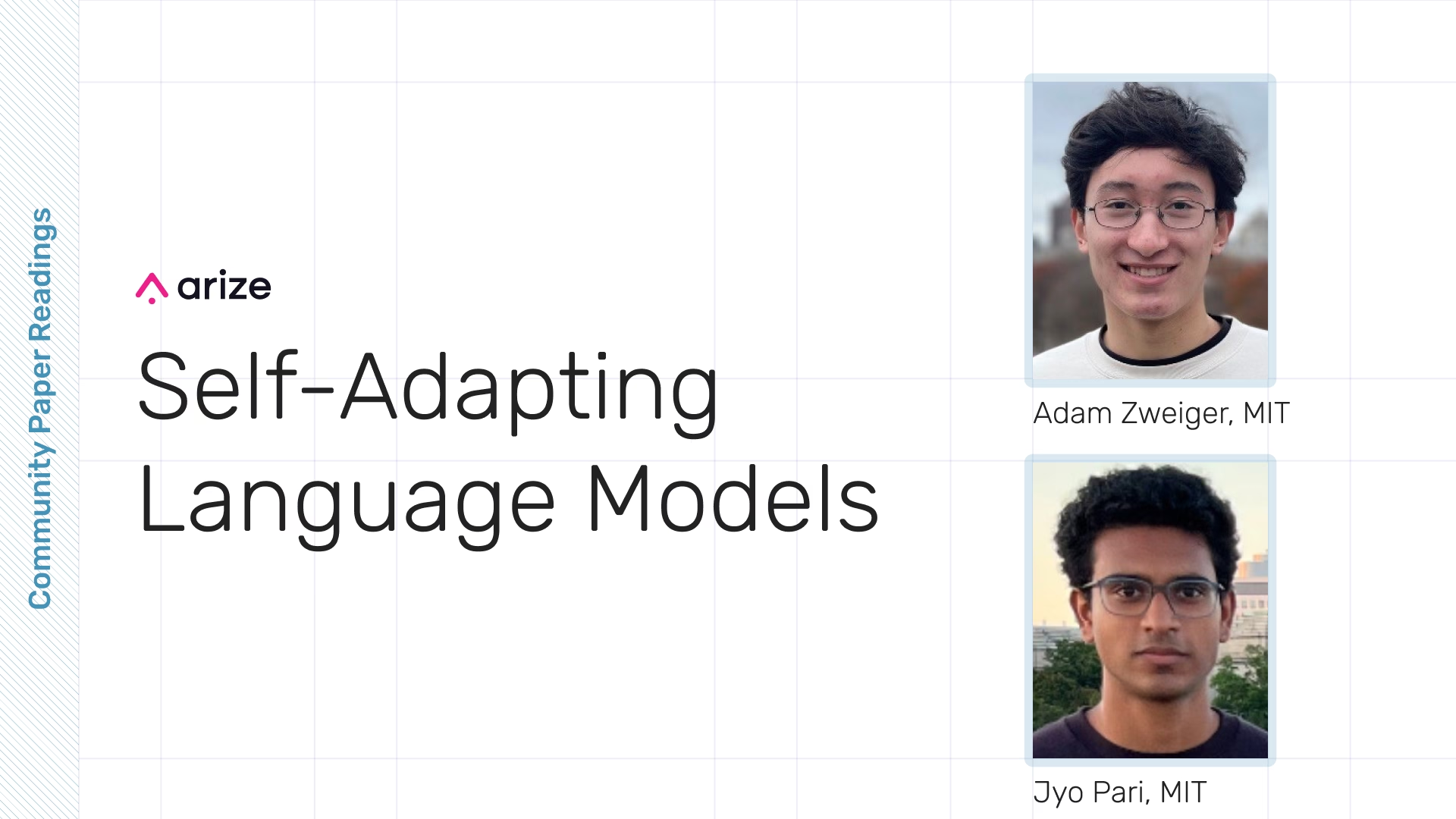
Self-Adapting Language Models: Paper Authors Discuss Implications
In a recent live AI research paper reading, the authors of the new paper Self-Adapting Language Models (SEAL) shared a behind-the-scenes look at their work, motivations, results, and future directions. The paper introduces a novel method for enabling large language models (LLMs) to adapt their own weights using self-generated data and training directives — “self-edits.”…
Meet Alyx: Arize’s Evolving AI Agent
We’re excited to introduce Alyx, the next evolution in Arize’s intelligent assistant. You might remember our first iteration — Copilot — launched last year as a set of tools to help users accomplish small tasks across the platform. Here’s the original blog I wrote about it. Copilot gave us a glimpse into the future, but…
Introducing adb: Arize’s Proprietary OLAP Database
Earlier this month, we rolled out real‑time ingestion support to every Arize AX workspace—paid and free. With that launch, Arize now ingests terabytes of data every day across hundreds of customers and thousands of users, all at (near) real‑time speeds. How do we keep those speeds consistent across so many workloads? The answer is our…
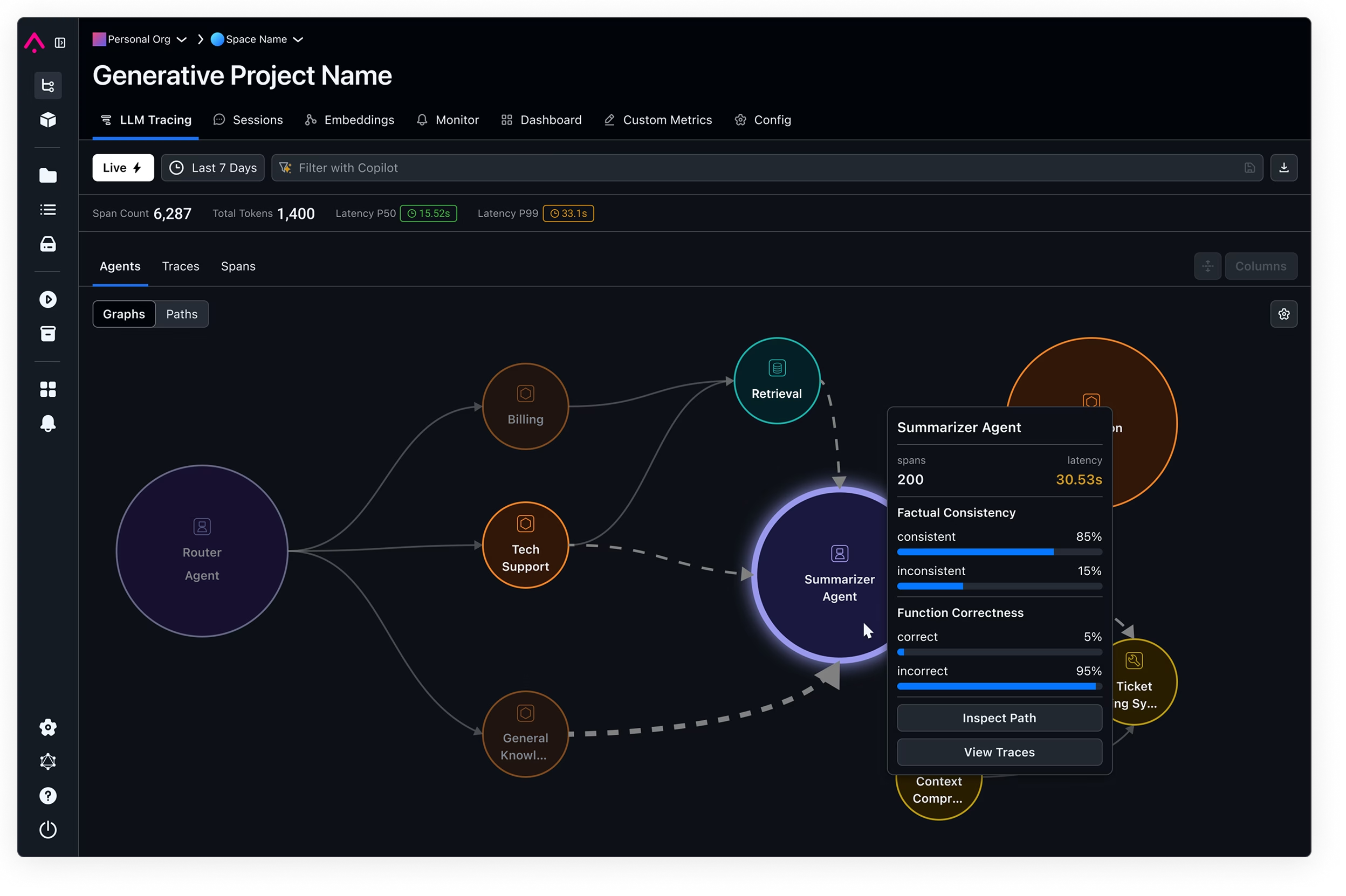
Arize Observe 2025 – Product Releases
Arize Observe 2025 brought a wealth of new product releases, including a redesigned copilot, agent eval options, and state-of-the-art prompt optimization techniques. Check them all out below! Copilot v3: Alyx https://storage.googleapis.com/arize-phoenix-assets/assets/videos/observe_Context%20-%20shorter.mp4 Inspired by everyone’s favorite dev tool, Cursor, our Copilot UI just got a major upgrade. You can now drop context anywhere across the app and open…
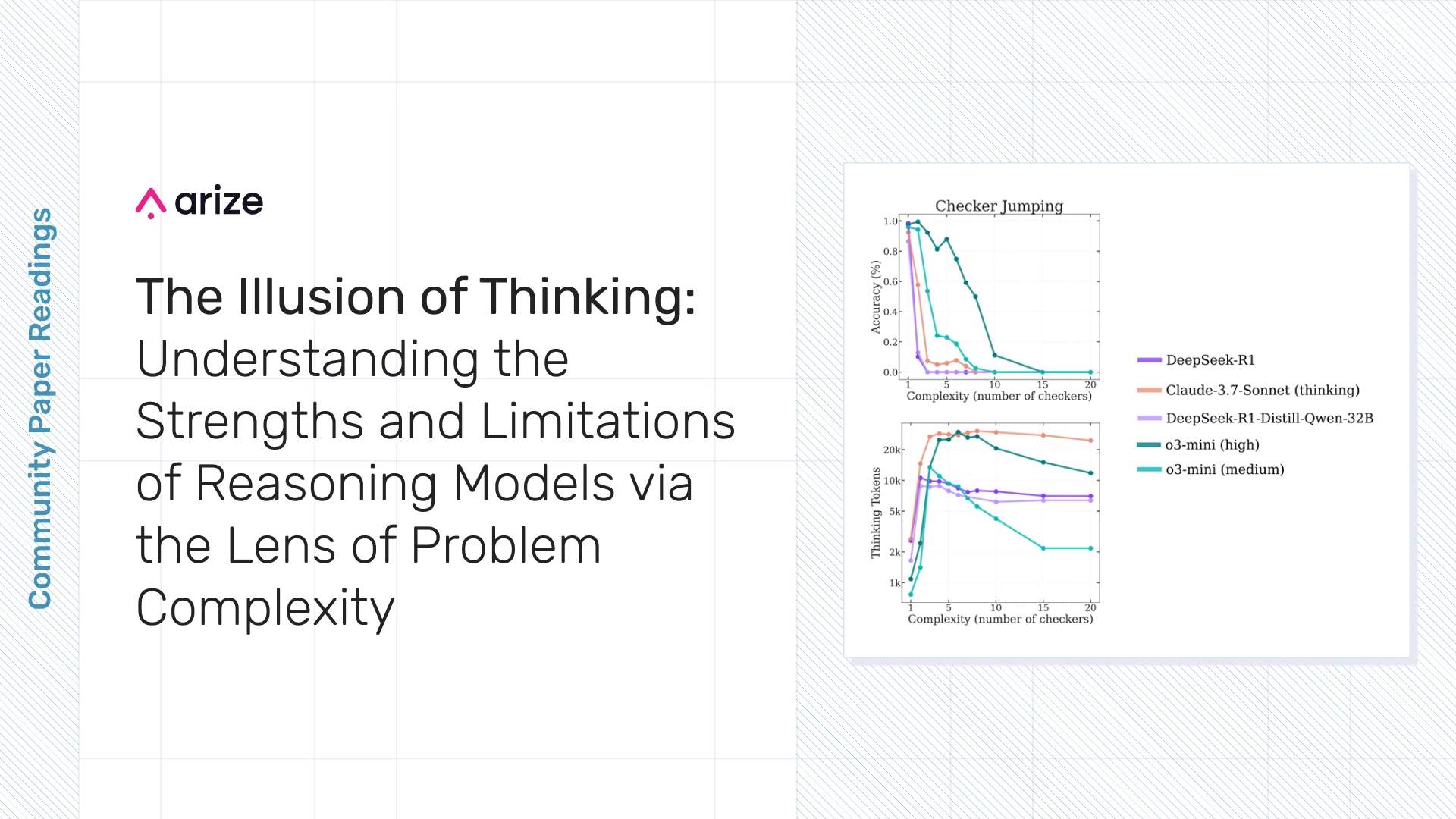
The Illusion of Thinking: What the Apple AI Paper Says About LLM Reasoning
A recent paper from Apple researchers—The Illusion of Thinking: Understanding the Strengths and Limitations of Reasoning Models via the Lens of Problem Complexity—has stirred up significant discussion in the AI community. The authors argue that Large Reasoning Models (LRMs), which generate detailed “thinking traces” before answering questions, may not truly reason in the way we…
Introducing GraphQL for Humans – Building a Text-To-GraphQL Agent In a Weekend
Working with GraphQL can often feel overwhelming, especially when you’re navigating massive schemas with tens of thousands of lines. Writing GraphQL queries is often a time-consuming task prone to errors, making it a common pain point for developers. Recognizing this, our solutions team embarked on a recent hackathon with one clear goal: develop a smarter,…