-
 Agents
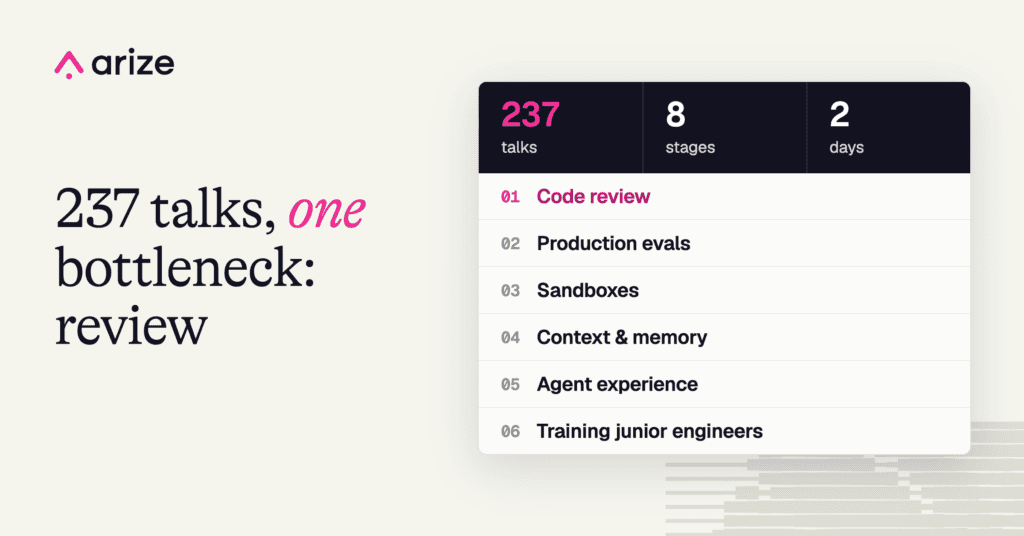
What everyone was talking about at WeAreDevelopers World Congress North America
After 237 talks across eight stages, code review emerged as the bottleneck for AI-generated code. Here are the production eval, sandbox, context, and agent experience themes that kept… Laurie Voss September 29, 2026 16 min read -
 Agents
AI agent regression testing with Agent Experiments in Arize AX
A cancellation-policy fix raised action safety and dropped average task completion from 0.89 to 0.72. This walkthrough shows how to regression-test agent changes with Agent Experiments in Arize… Nancy Chauhan Fuad Ali September 14, 2026 9 min read -
 Agents
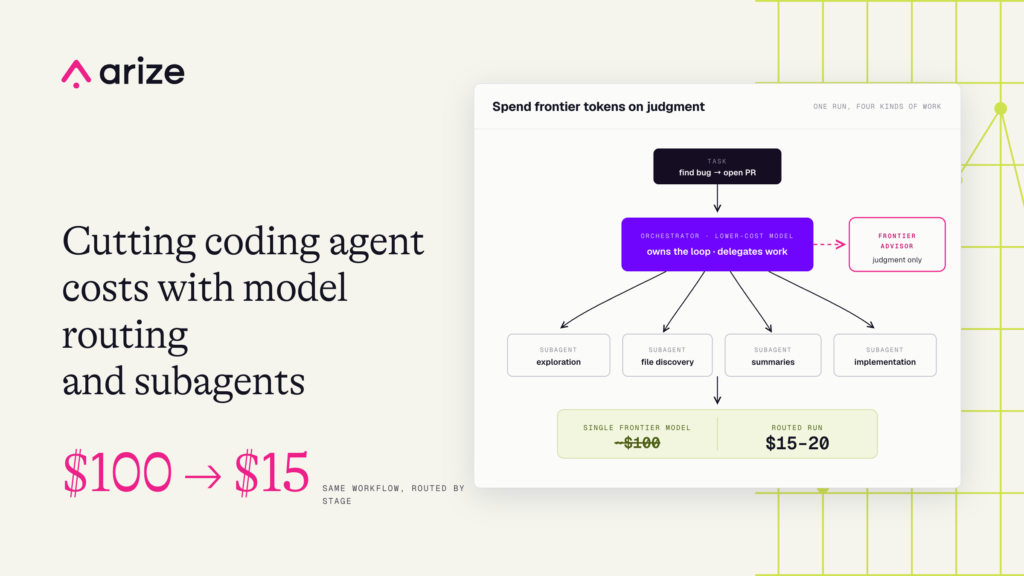
How I cut coding agent costs with model and harness routing
By routing planning, exploration, implementation, and review to different models, I reduced one recurring coding-agent workflow from roughly $100 to $15-$20 per run. Arda Hoke September 8, 2026 9 min read -
 Agents
AI agent guardrails vs. evals: How to build more reliable agent systems
Guardrails constrain what an agent can do in code; evals judge whether it performed well. Learn how both layers—and the harness around them—make long-running AI agents reliable. Aaron Winston August 13, 2026 9 min read -
 Agents
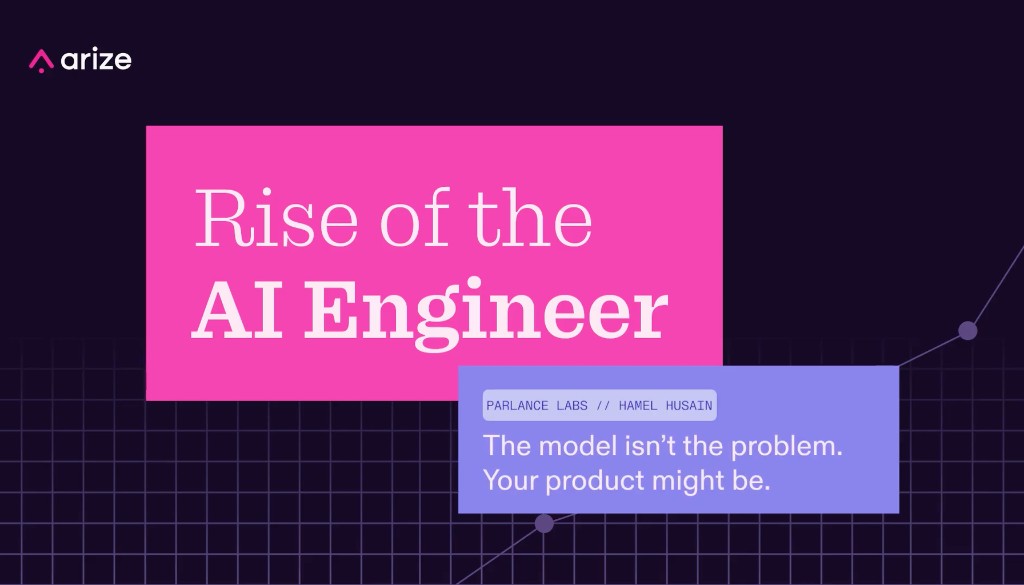
Hamel Husain explains why AI evals fail before the evaluation begins
Hamel Husain explains why ambiguous inputs, generic metrics, and disconnected review workflows can make AI evaluations misleading, and how developers can build a better process around real production… Sara Verdi July 30, 2026 7 min read -
 Agents
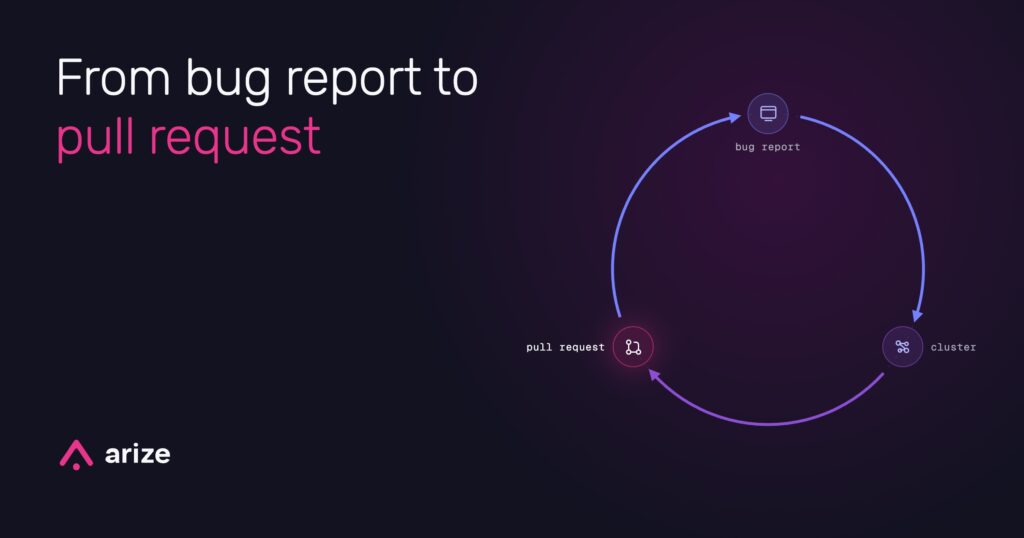
How OpenAI uses human feedback to evaluate and improve LLMs
At ChatGPT scale, user frustration arrives as support tickets, ratings, social posts, and corrections buried inside conversations. OpenAI built a feedback system that can find the pattern behind… Sara Verdi July 21, 2026 13 min read -
 Agents
Inside Cursor’s agent factory: how it verifies AI-written code
As background agents take on more implementation work, Cursor is rebuilding the software development lifecycle around risk scores, developer-like environments, video evidence, and review systems that learn from… Sara Verdi July 20, 2026 10 min read -
 Agents
Kiro CLI observability: trace and evaluate agent changes with Arize Skills
Use Arize Skills with Kiro CLI to trace coding-agent changes, build datasets from failures, run experiments, and validate prompts before shipping. Richard Young July 15, 2026 11 min read -
 Agents
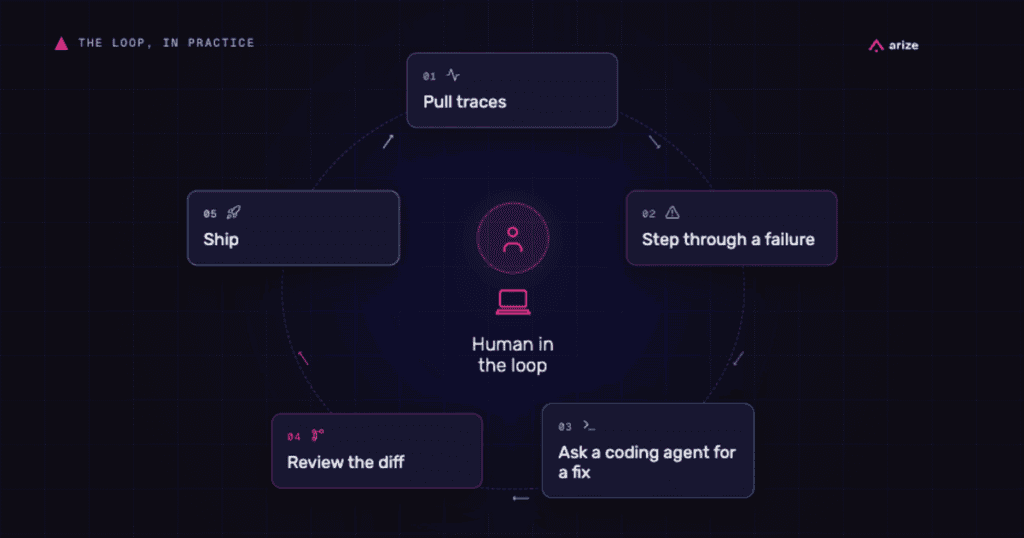
From human-operated agent development to systematic agent improvement
At Observe 2026, Jason Lopatecki and Aparna Dhinakaran described the shift from human-operated agent development to systematic agent improvement—and what builders should change in their stacks first. Sara Verdi July 14, 2026 10 min read -
 Agents
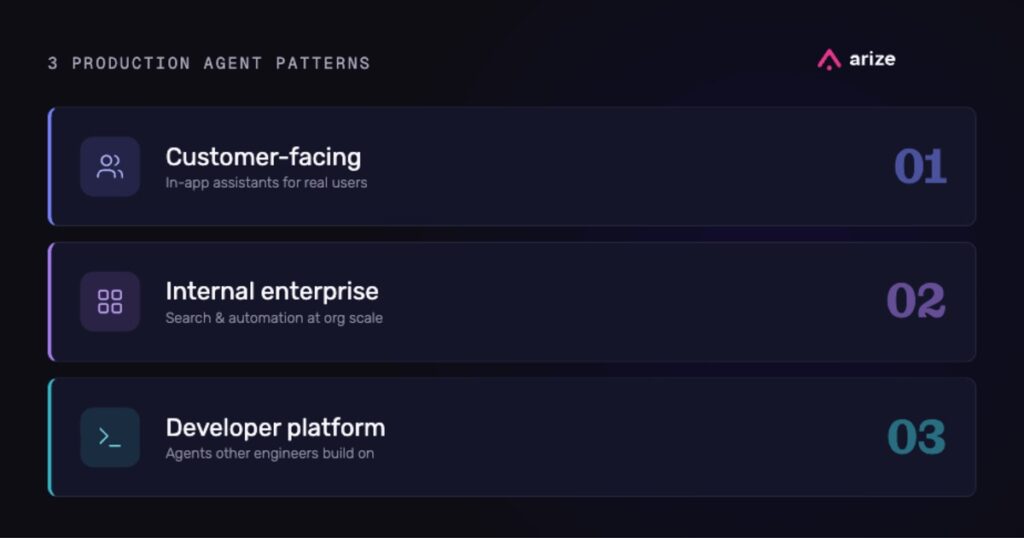
3 production patterns for AI agents and how to evaluate each one
A local coding agent, an in-app customer assistant, and an AI SRE triaging production logs may all use the same model class—but not the same harness, eval plan,… Sara Verdi July 10, 2026 9 min read -
 Agents
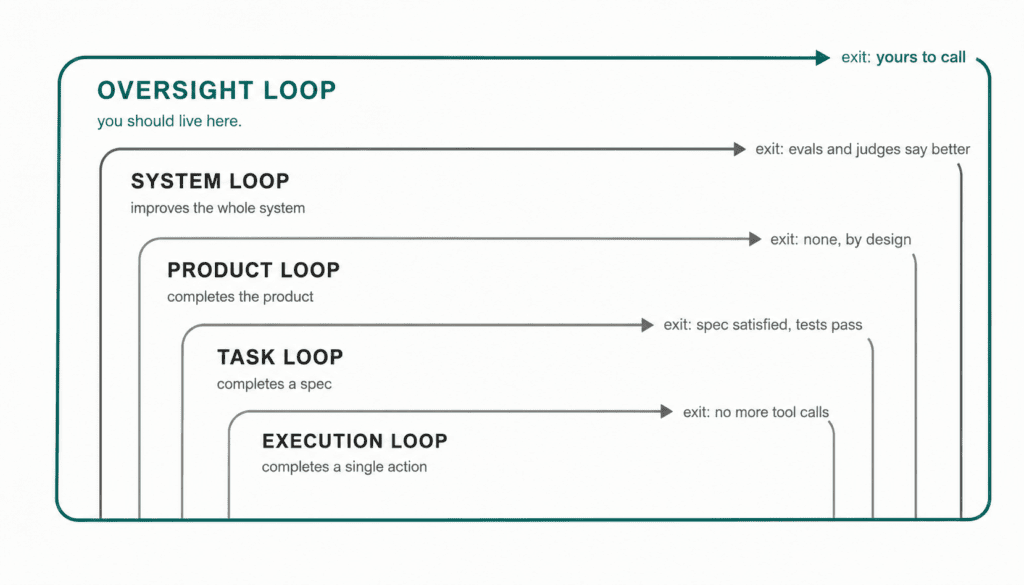
What is a loop in AI engineering, anyway?
The AI engineering world is using “loop” to describe several different agent architectures. This post maps execution loops, task loops, product loops, system loops, and the human oversight… Aparna Dhinakaran Laurie Voss July 10, 2026 10 min read -
 Agents
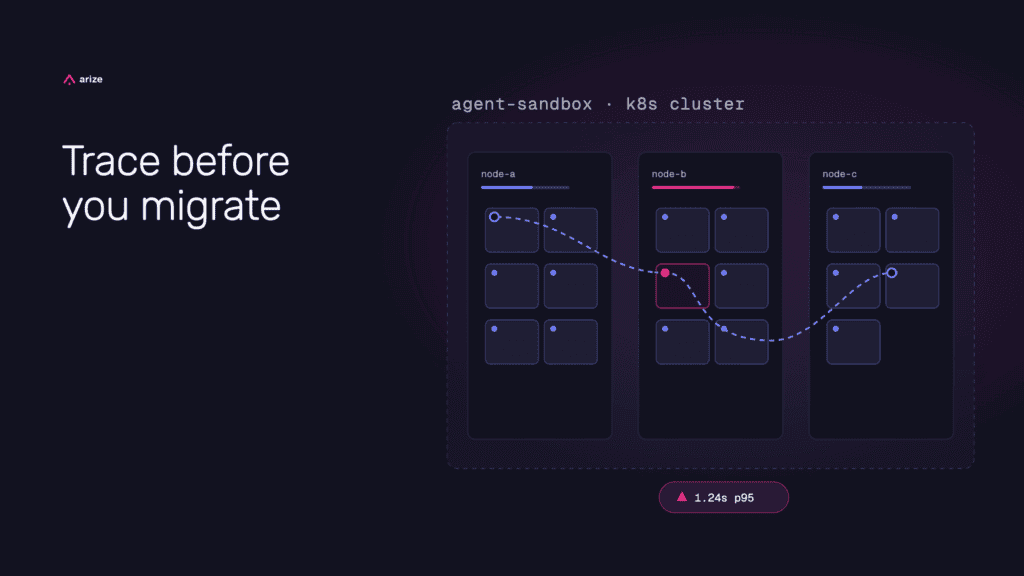
Trace before you migrate: Measuring Kubernetes bottlenecks in AI agent sandboxes
Kubernetes is strong for long-lived services, but it is often a poor default for short-lived agent sandboxes. Trace sandbox creation, tool execution, eval latency, and full trajectory time… Sara Verdi July 9, 2026 7 min read -
 Agents
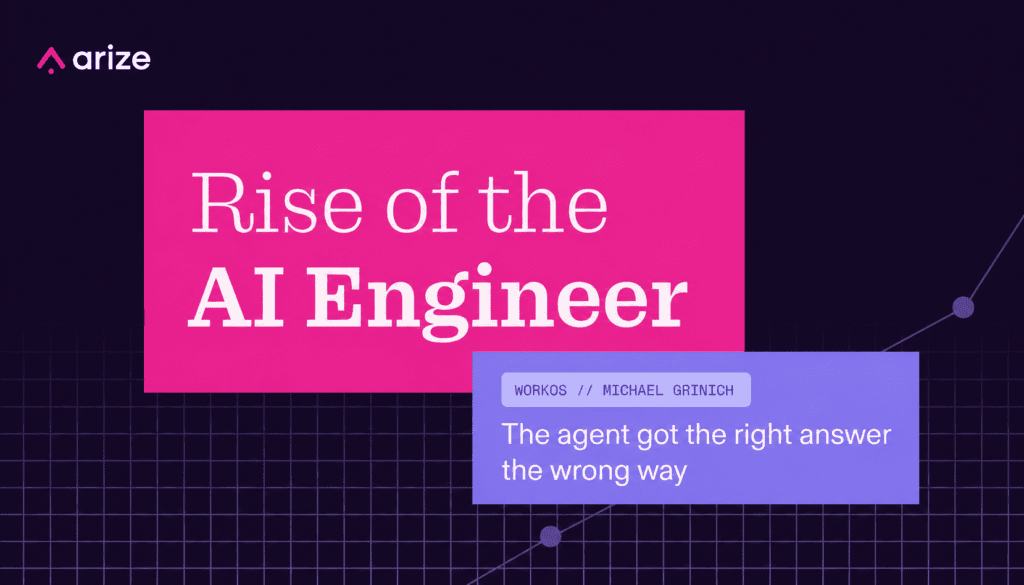
The agent is the user now: lessons from the founder of WorkOS
WorkOS founder Michael Grinich explains why the next era of AI engineering depends on the systems around agents: identity, permissions, evals, memory, and feedback loops that keep autonomous… Aaron Winston July 8, 2026 9 min read -
 Agents
Own the loop: A field guide to agent harnesses
As models become cheaper and more interchangeable, the durable advantage shifts to the agent harness: the loop, tools, memory, permissions, and workflow you can own and refine. Aparna Dhinakaran July 6, 2026 8 min read -
 Agents
How to evaluate AI agents, avoid reward hacking, and build better specs
Agent evals are repeatable tests that score whether AI agents completed a task correctly. Learn how to design rubrics, test suites, and trace-based evals that catch failures and… Sara Verdi July 2, 2026 9 min read
Don’t ship vibes.
Arize gives AI teams observability and evals to understand and improve agent performance.

