The Evaluator
Your go-to blog for insights on AI observability and evaluation.
Showing 181–190 of 458 posts (page 19 of 46)
Build More Accurate AI Apps Through Fast Experimentation with Arize Phoenix, Langflow, and NVIDIA
Co-Authored by Alejandro Cantarero, DataStax One of the biggest challenges AI app developers face is ensuring the apps they build provide accurate answers. When the AI isn’t accurate, customers quickly lose trust in the app. As a developer, how can you be confident that your app will deliver accurate responses and great great experiences for…
Arize Release Notes: Labeling Queues, Expand/Collapse Rows in Trace Table
What’s New Labeling Queues Labeling Queues are now live, making dataset annotation more scalable and efficient with features such as: New Annotator Role – A dedicated RBAC role with focused permissions, ensuring annotators only see assigned records while keeping other data secure. Seamless Queue Creation – Create Labeling Queues directly from dataset records, with annotations…
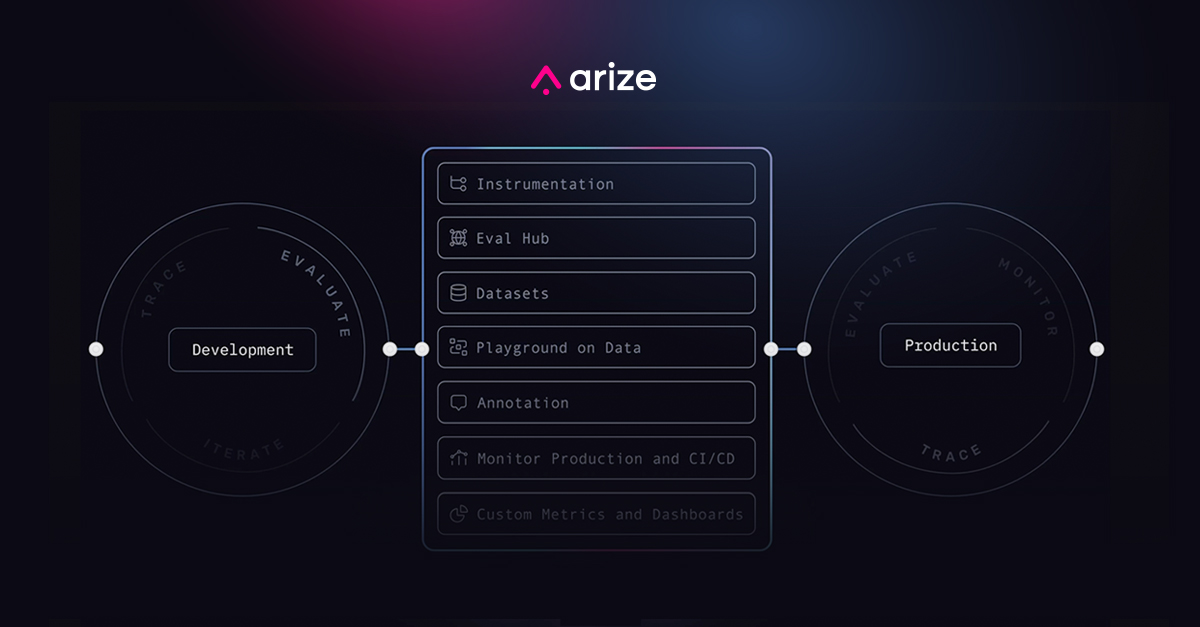
Why AI Engineers Need a Unified Tool for AI Evaluation and Observability
AI engineers today face a growing challenge: bridging the gap between development and production while ensuring high performance across diverse AI model types—whether it’s generative AI, traditional machine learning (ML), or computer vision (CV). Traditionally, development and production have been treated as separate phases, but in reality, they are deeply interconnected: Development informs production by…
Sign up for our newsletter, The Evaluator — and stay in the know with updates and new resources:
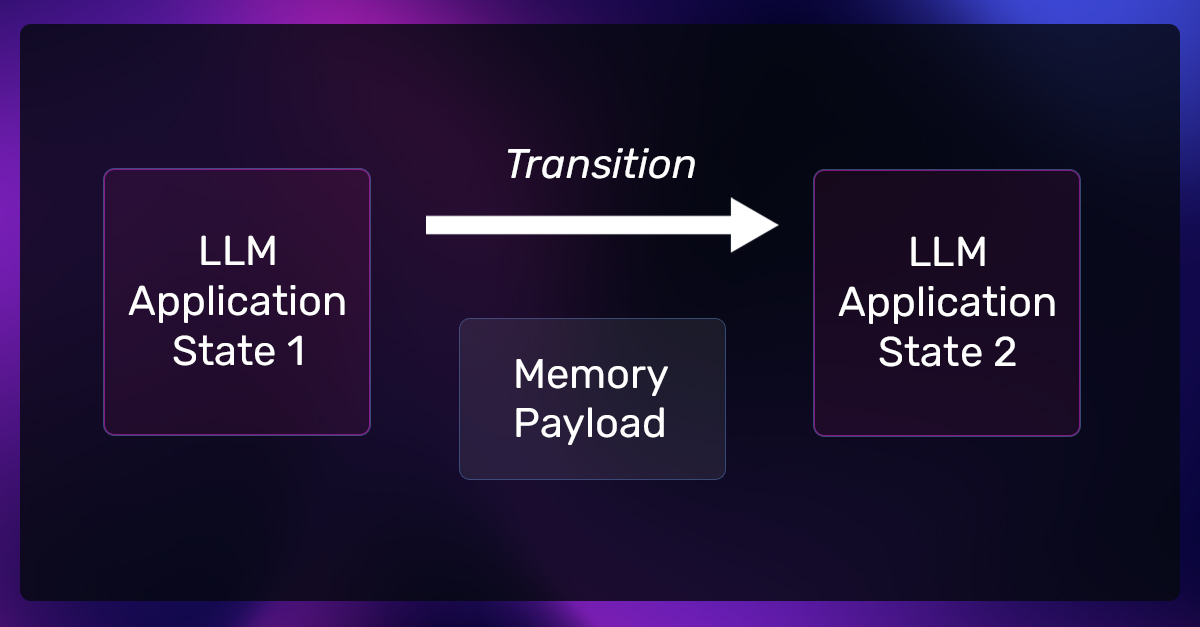
Memory and State in LLM Applications
Memory in LLM applications is a broad and often misunderstood concept. In this blog, I’ll break down what memory really means, how it relates to state management, and how different approaches—like session-based memory versus long-term persistence—affect performance, cost, and user experience. Defining “Memory” The term “memory” is often used in discussions about LLM applications, but…
How DeepSeek is Pushing the Boundaries of AI Development
How do you train an AI model to think more like a human? That’s the challenge DeepSeek is tackling with its latest models, which push the boundaries of reasoning and reinforcement learning. In a recent paper reading, SallyAnn DeLucia, a product manager at Arize, and Nick Luzio, a solutions engineer, broke down the key insights…

Arize AI Raises $70M Series C to Build the Gold Standard for AI Evaluation & Observability
In 2020, we founded Arize with a clear mission: to give teams the tools they need to understand, troubleshoot, and improve AI performance in the real world. Our initial seed investment deck started with the simple line “We Make AI Work.” Since then, AI has evolved at breakneck speed—expanding beyond traditional machine learning into generative…
How to Build An AI Agent
An agent is a software system that orchestrates multiple processing steps— including calls to large language models—to achieve a desired outcome. Rather than following a linear, predefined path, an agent can traverse a wide solution space, handling decision-making logic, remembering intermediate steps, and determining which actions to take and in which order. This enables agents…
Arize Release Notes: Monitor Runtime, Create a Dataset from CSV, and More
Enhancements Monitor Runtime Users can now schedule when monitors run. Users can configure their monitors to run: Hourly & Daily: Select specific days of the week. Daily, Weekly & Monthly: Runs at 12 AM UTC after creation. Default Behavior: Monitors will continue running every 3 hours, 7 days a week unless configured otherwise. Column Specification…

How 100X AI Uses Phoenix to Supercharge AI-Driven Troubleshooting
Introduction When you’re an on call engineer, every second counts—especially when you’re troubleshooting incidents that will impact users. 100X AI is a startup that’s building AI agents to help engineering teams resolve incidents faster and with greater precision. But to build intelligent, automated troubleshooting workflows, they need visibility into these LLM-powered agents—that’s why they use…

Multiagent Finetuning: A Conversation with Researcher Yilun Du
This week we were excited to talk to Google DeepMind Senior Research Scientist (and incoming Assistant Professor at Harvard), Yilun Du, about his latest paper “Multiagent Finetuning: Self Improvement with Diverse Reasoning Chains.” This research introduces a multiagent finetuning framework that enhances the performance and diversity of language models by employing a society of agents…