

Google Colab
colab.research.google.com
- Explore how different prompting strategies impact performance in a sentiment analysis task on a dataset of reviews.
- Run an evaluation to measure how the prompt affects the model’s performance
- Track your how your prompt and experiment changes overtime in Phoenix
Setup Dependencies and Keys
phoenix serve; for a deployment running elsewhere, use its hostname instead.
Load Dataset Into Phoenix
This dataset contains reviews along with their corresponding sentiment labels. Throughout this notebook, we will use the same dataset to evaluate the impact of different prompting techniques, refining our approach with each iteration. Here, we also import the Phoenix Client, which enables us to create and modify prompts directly within the notebook while seamlessly syncing changes to the Phoenix UI.Set up Phoenix Client
Zero-Shot Prompting
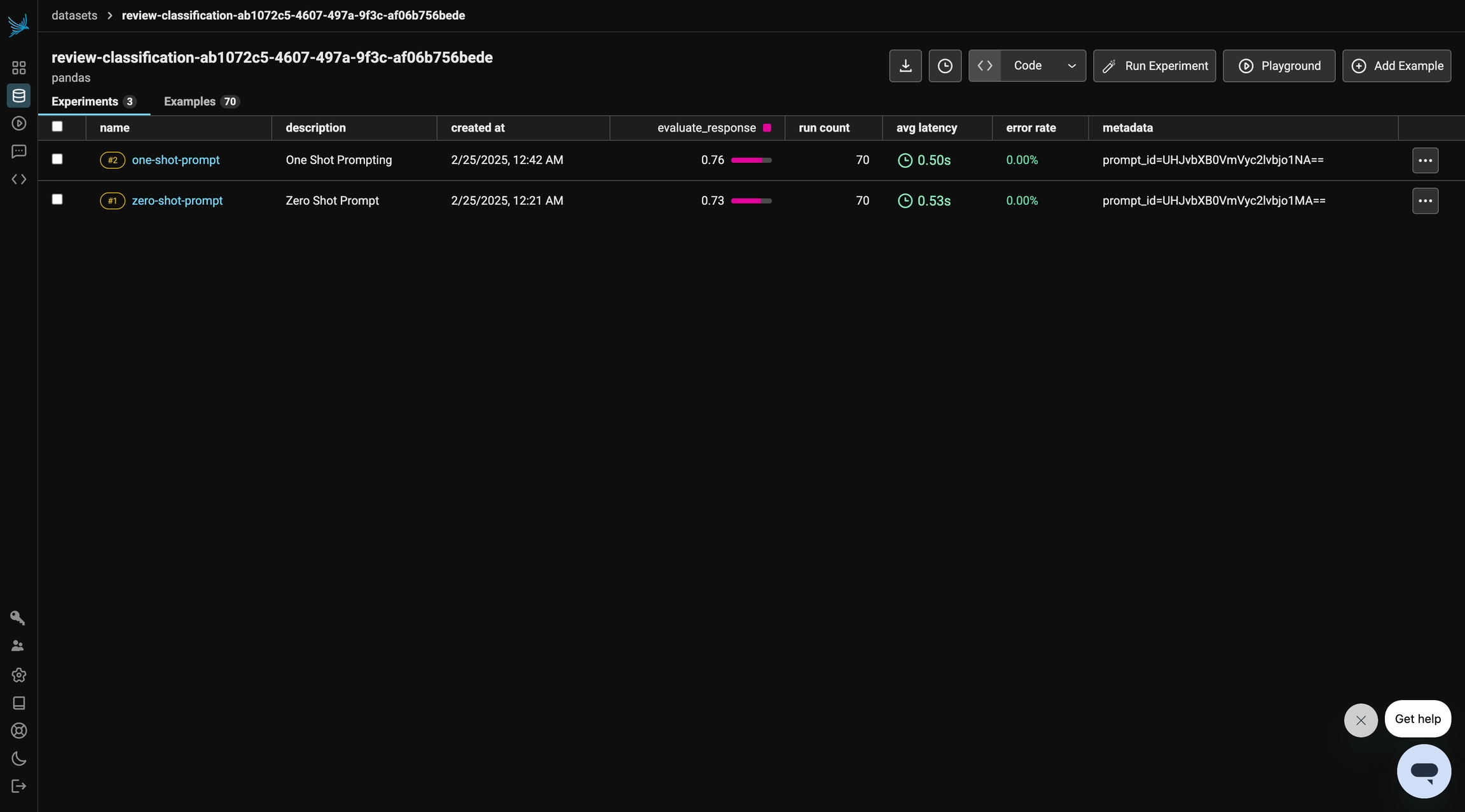
Zero-shot prompting is a technique where a language model is asked to perform a task without being given any prior examples. Instead, the model relies solely on its pre-trained knowledge to generate a response. This approach is useful when you need quick predictions without providing specific guidance. In this section, we will apply zero-shot prompting to our sentiment analysis dataset, asking the model to classify reviews as positive, negative, or neutral without any labeled examples. We’ll then evaluate its performance to see how well it can infer the task based on the prompt alone.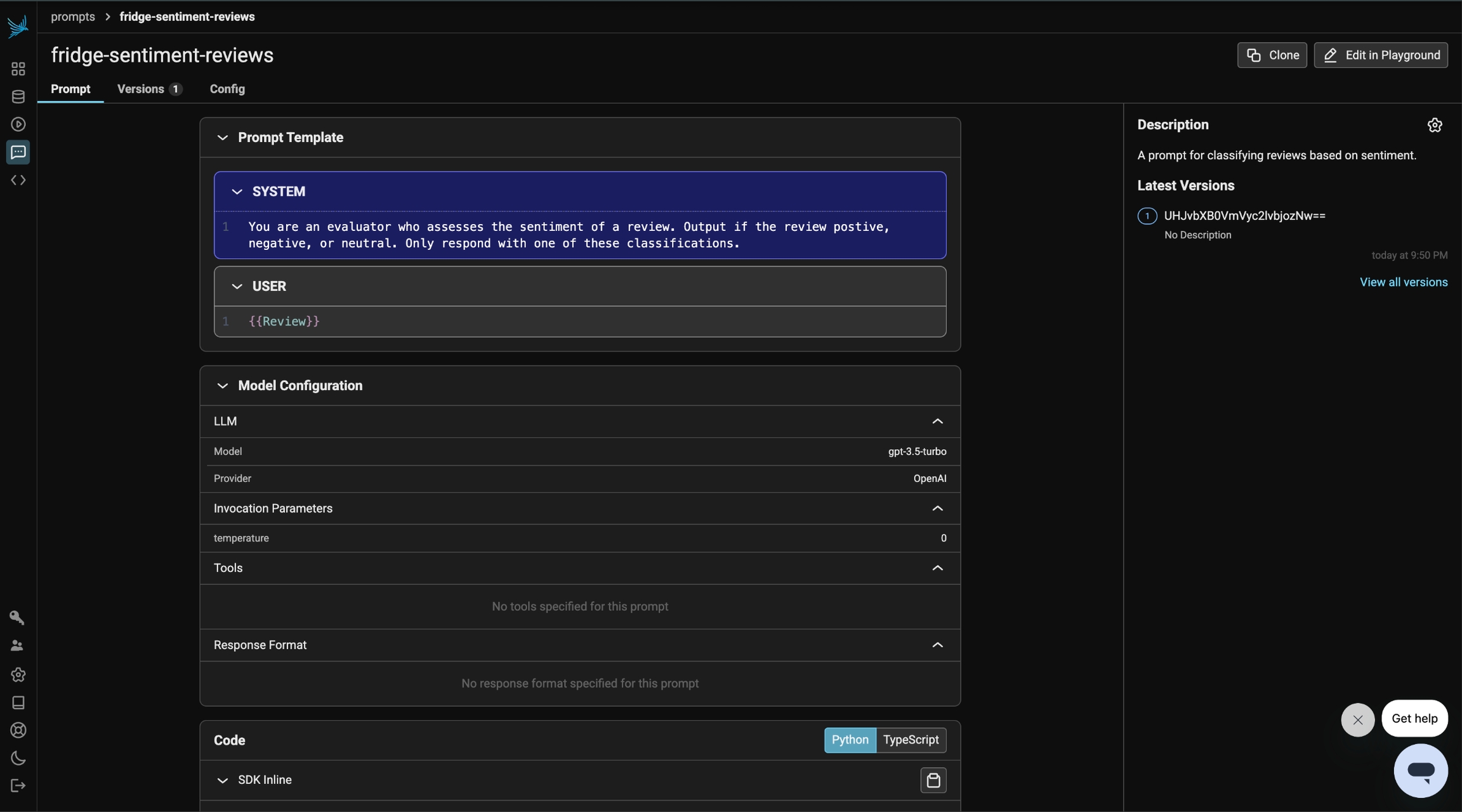
One-Shot Prompting
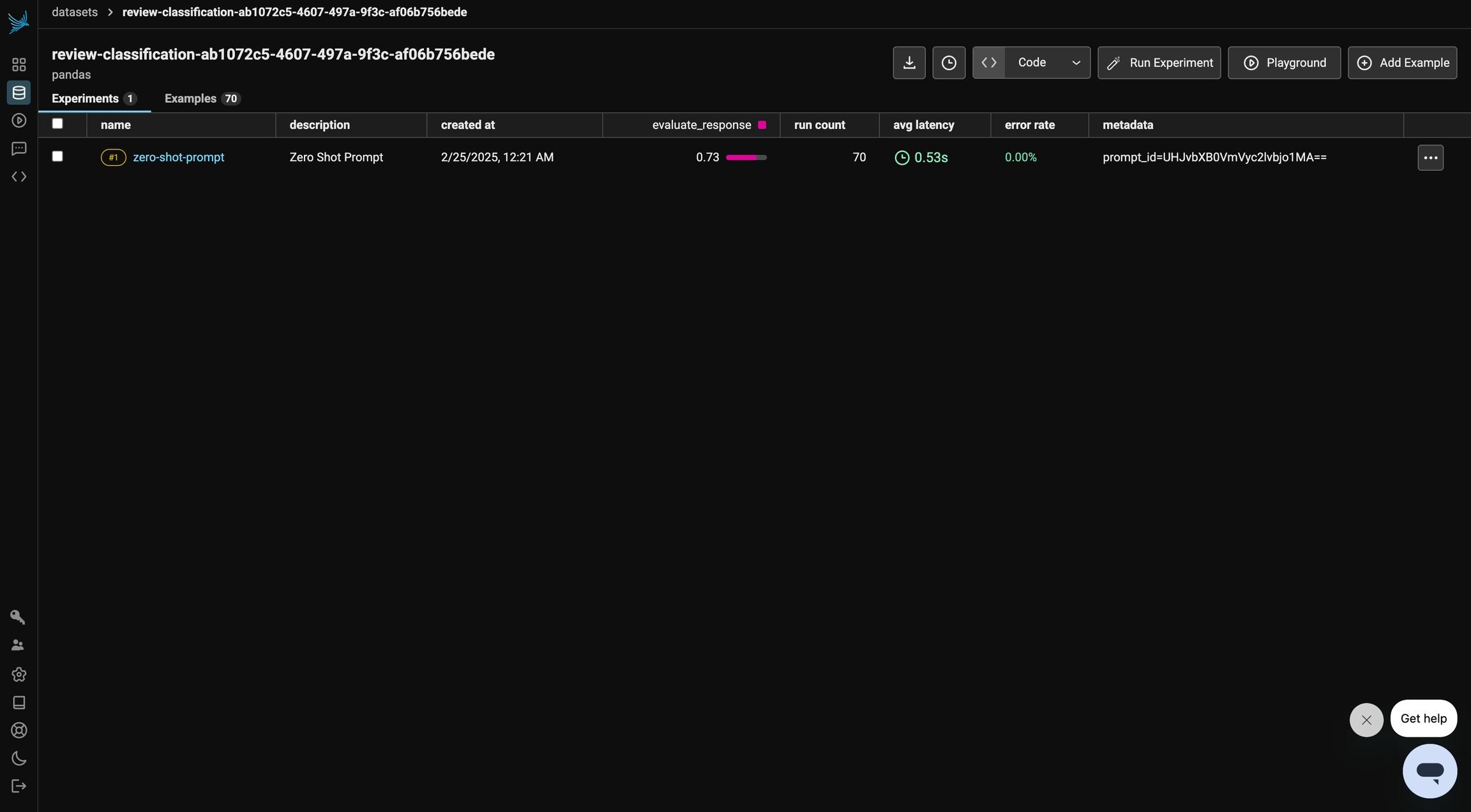
One-shot prompting provides the model with a single example to guide its response. By including a labeled example in the prompt, we give the model a clearer understanding of the task, helping it generate more accurate predictions compared to zero-shot prompting. In this section, we will apply one-shot prompting to our sentiment analysis dataset by providing one labeled review as a reference. We’ll then evaluate how this small amount of guidance impacts the model’s ability to classify sentiments correctly.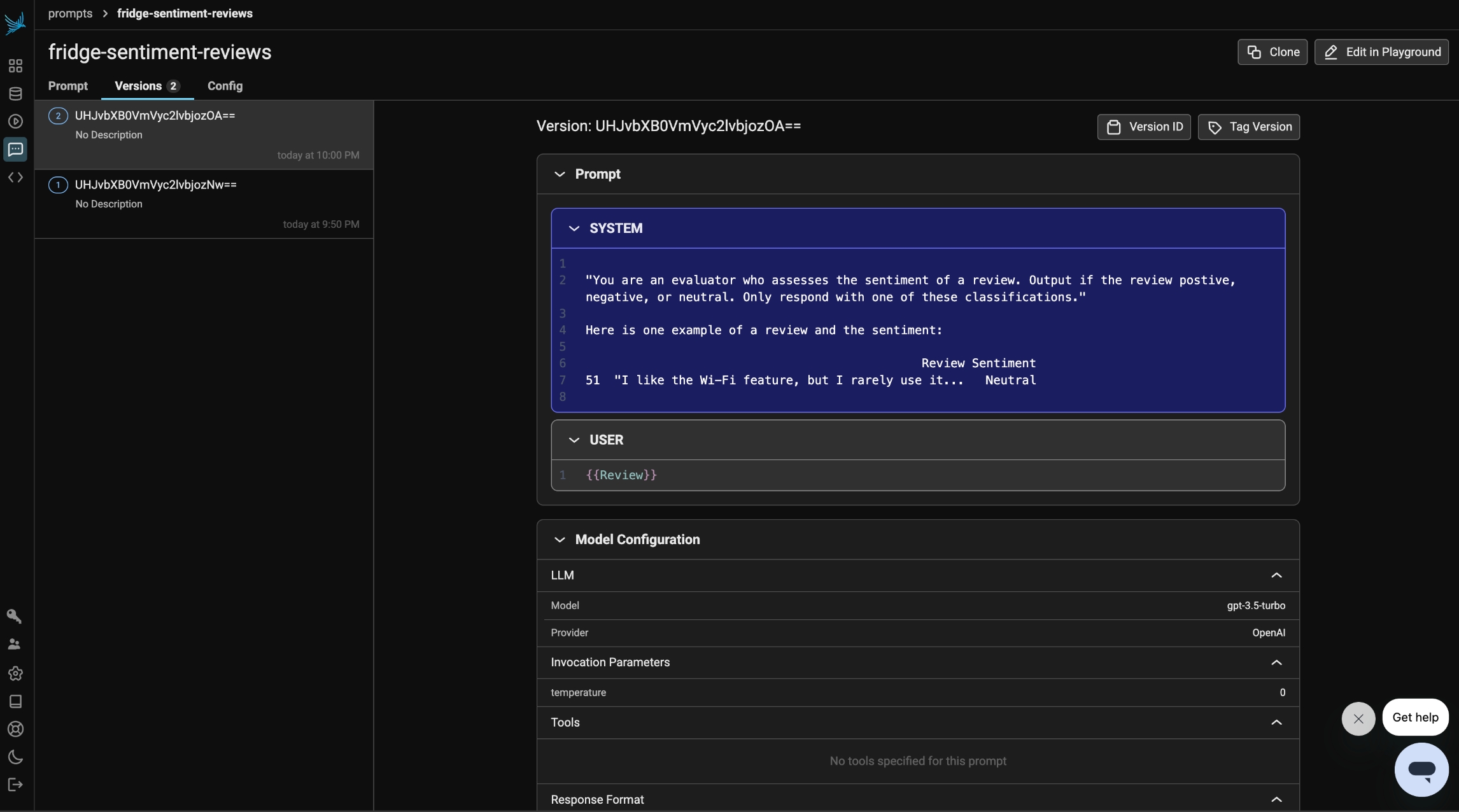
Few-Shot Prompting
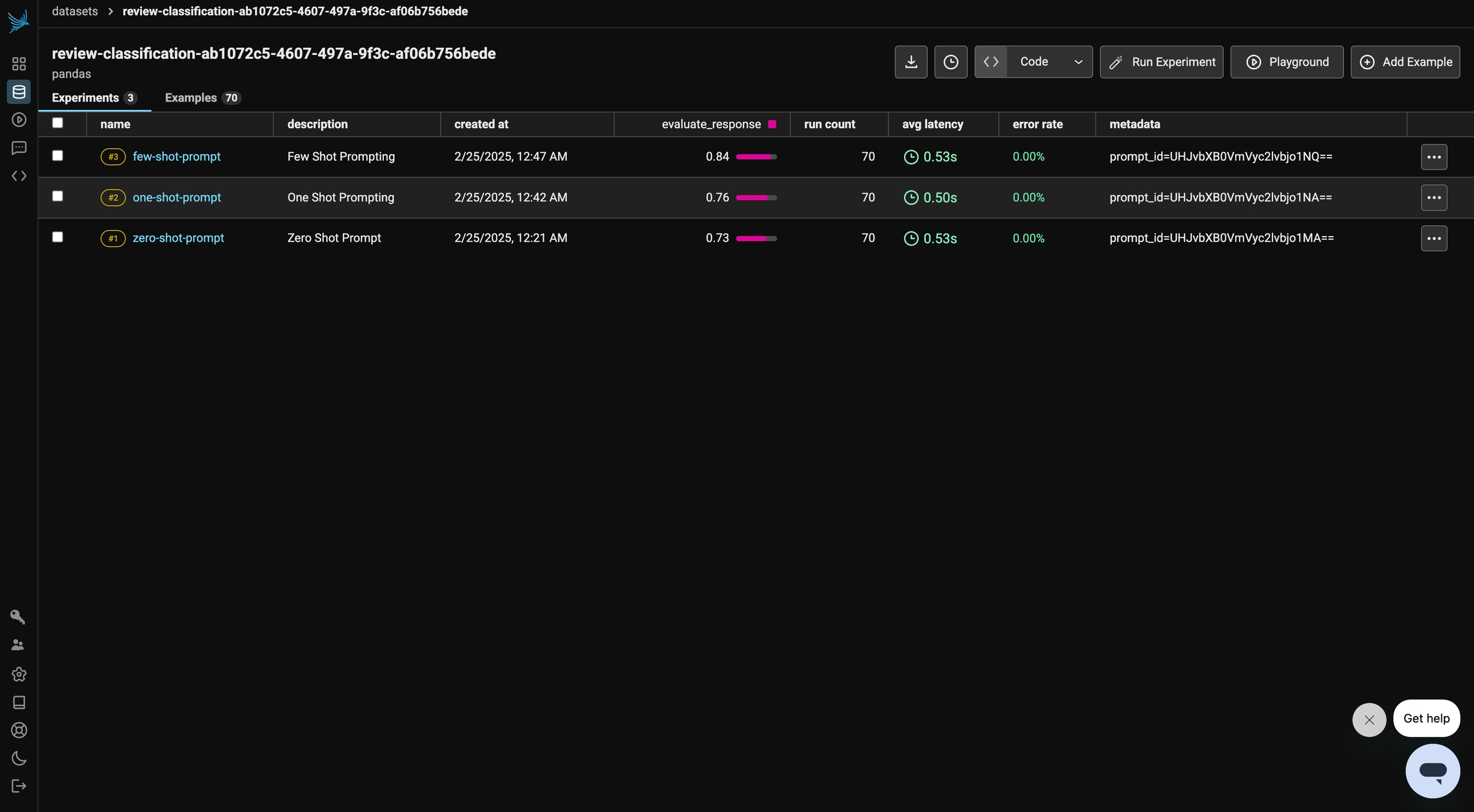
Finally, we will explore few-shot Prompting which enhances a model’s performance by providing multiple labeled examples within the prompt. By exposing the model to several instances of the task, it gains a better understanding of the expected output, leading to more accurate and consistent responses. In this section, we will apply few-shot prompting to our sentiment analysis dataset by including multiple labeled reviews as references. This approach helps the model recognize patterns and improves its ability to classify sentiments correctly. We’ll then evaluate its performance to see how additional examples impact accuracy compared to zero-shot and one-shot prompting.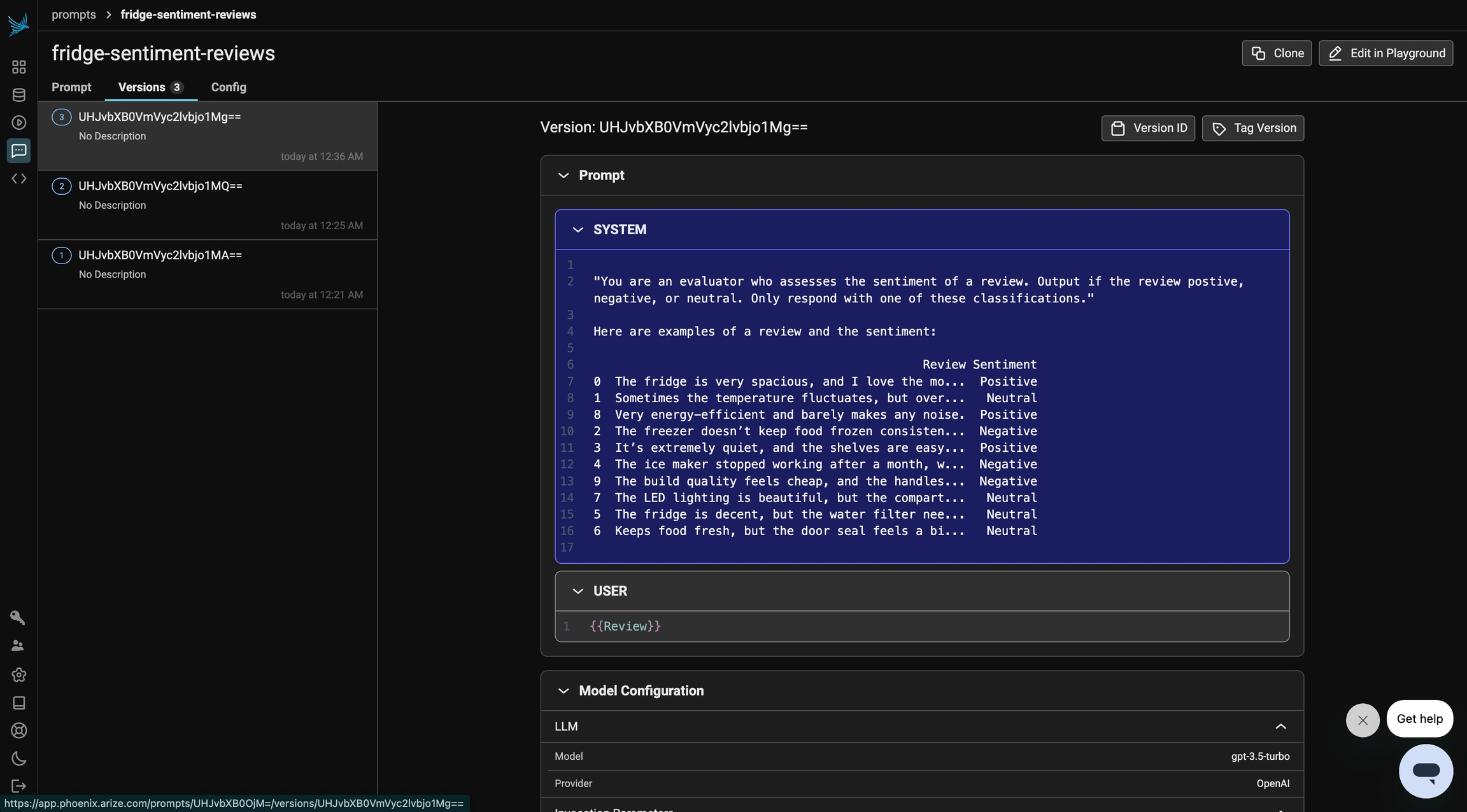
Final Results
In this final run, we observe the most significant improvement in evaluation results. By incorporating multiple examples into our prompt, we provide clearer guidance to the model, leading to better sentiment classification. Note: Performance may still vary, and in some cases, results might decline. Like before, this is not necessarily “wrong,” as factors like the choice of LLM, the randomness of selected test examples, and inherent model behaviors can all influence outcomes.