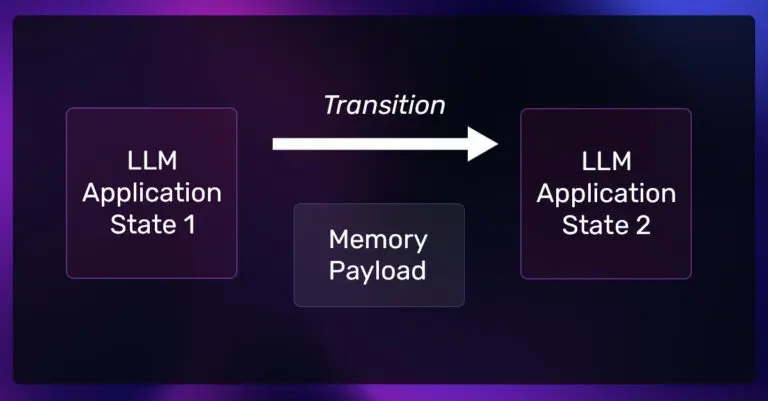

Agent workflow memory is a technique where an agent extracts reusable routines from its own past successful runs and applies them to later tasks. Instead of rediscovering the same eight-step sequence for filing an expense report every time, the agent induces that sequence once, stores it as a named workflow, and injects it as a starting plan the next time a similar task shows up.
AWM is memory of procedure. The stored artifact is not something the agent learned about the world, it is a runbook the agent wrote for itself, and that difference decides how it has to be validated, retrieved, and retired.
Build better agents with Arize
Trace, evaluate, and learn. Build agents that work with Arize AX and start tracing your runs today.
Prefer open source? Try Arize Phoenix for self-hosted, open source agent observability.

Key takeaways
- AWM mines an agent’s past trajectories for recurring action sequences, stores them as reusable workflows, and injects them into context when a similar task appears.
- It can run offline over a corpus of prior trajectories or online during live use, refining the workflow library as the agent works.
- The reported payoff is fewer steps and higher success on long-horizon tasks, because the agent starts from a known-good plan instead of exploring from scratch.
- The risk is that a workflow induced from a lucky run becomes a bad habit the agent applies confidently to tasks it does not fit.
- Induced workflows are only as trustworthy as the trajectories they came from, so trajectory-level tracing and evaluation are prerequisites rather than nice-to-haves.
How AWM works
The mechanism has three parts.
Observe trajectories. As the agent works, its actions are recorded: tool calls, navigation steps, form fills, intermediate reasoning, and the eventual outcome. This is the same trace data teams already collect for debugging. AWM treats that record as training material rather than as a forensic artifact.
Induce workflows. Successful trajectories are analyzed for common subroutines. If several runs contain the same ordered set of actions that reliably produce a result, that subsequence is abstracted into a workflow: a named procedure with parameters, so “navigate to the orders page for customer 4417” generalizes to “navigate to the orders page for a given customer.” The abstraction step is the interesting part, because a sequence stored too literally never matches again and a sequence abstracted too aggressively stops being useful guidance.
Reuse them. When a new task arrives, relevant workflows are retrieved and placed in context as candidate plans. The agent can follow one, adapt it, or ignore it. This is guidance rather than hard control flow. A hand-built graph of steps is a different construct, declared in advance rather than induced from what the agent already did.
AWM operates in two modes. Offline induction runs over a corpus of prior trajectories, producing a workflow library before deployment. Online induction runs during live use, so the library grows as the agent encounters new task types. Online is more adaptive and more dangerous, since there is no review step between “this worked once” and “this is now the recommended approach.”
Why it helps on long-horizon tasks
Long-horizon agent tasks fail by compounding. Each step carries some probability of a wrong turn, and a twenty-step task multiplies those probabilities into a low chance of finishing correctly. Most of the wasted steps are not exotic reasoning failures. They are the agent relearning where the settings page is.
Injecting a known-good procedure removes that exploration. Fewer steps means fewer opportunities to go wrong, fewer tokens, and lower latency. The effect is largest in environments with stable structure and repetitive tasks, which is why the early demonstrations were on web navigation agents. Where task structure varies wildly from run to run, there is less to induce.
A related and very practical version of this idea is already in use: written procedures a coding agent loads on demand. Instead of inducing workflows automatically, a human writes the routine down once and the agent retrieves it when relevant. Same benefit, human-authored, and much easier to audit.
Where AWM goes wrong
A lucky run becomes doctrine. If a trajectory succeeded for reasons unrelated to its action sequence, inducing a workflow from it encodes superstition. The agent will then apply that workflow with the confidence of experience. Success labels have to be trustworthy before induction is safe, and “the agent said it finished” is not a trustworthy label.
Workflows go stale. A UI changes, an API adds a required field, a permission model tightens, and the stored procedure now leads the agent into a dead end. Worse, the agent starts from that dead end rather than exploring, so a stale workflow can be worse than no workflow. Nothing in the mechanism notices this on its own.
Over-generalization. A workflow retrieved for a task it superficially resembles will be followed anyway, because the agent has been handed a plan and models are agreeable. The retrieval step that matches tasks to workflows inherits the usual retrieval problem: high similarity is not the same as applicability.
Library bloat. Induced workflows accumulate. Near-duplicates pile up, the retrieval step gets noisier, and the injected context grows. Deduplication and eviction are as unsolved here as for any other agent memory.
It hides regressions. When the agent follows a stored plan, its behavior looks consistent even as the environment shifts underneath it. The failure appears as a slowly rising error rate rather than an obvious break. Catching it requires evaluating the trajectory, not just the answer.
Instrumenting AWM
Because AWM feeds on trajectories and produces artifacts that change future behavior, it needs more instrumentation than a stateless agent, not less. Three things are worth capturing explicitly: which workflow was retrieved, whether the agent actually followed it, and whether the run succeeded. Without the first two you cannot attribute an outcome to a workflow, and attribution is the entire basis for deciding what stays in the library.
That means workflow retrieval and workflow adherence belong in the trace as spans, next to the model and tool calls. The general practice is covered in agent evaluation.
FAQ
What is the difference between AWM and agentic memory?
AWM stores procedures: sequences of actions that worked. Agentic memory stores knowledge: facts, entities, and the relationships between them. An agent can use both, and in a mature system it usually should, since knowing that a customer is on an enterprise plan and knowing how to change a plan are different kinds of memory.
Is agent workflow memory the same as fine-tuning?
No. Fine-tuning changes model weights. AWM leaves the model alone and changes what is in context at inference time by retrieving a stored plan. That makes AWM cheaper to update and much easier to inspect, since you can read the workflow the agent was given and delete it if it is wrong.
Does AWM require a special framework?
Not inherently. The requirements are a record of past runs, a reliable signal for which runs succeeded, a store for induced workflows, and a retrieval step that puts the relevant one in context. Those pieces can be built on whatever stack the agent already runs on. The architectural context is covered in the AI agent handbook.
How do I keep induced workflows from going stale?
Treat the workflow library as versioned code rather than as a cache. Track success rate per workflow over time, alert when one degrades, and expire workflows that have not been used or validated recently. Re-running a fixed task suite against the library on a schedule catches most environment drift, and AI agent testing covers how to build that suite.