Blog — page 3.

How we built UI Code Mode into Arize Phoenix
We replaced the 58 tools PXI used to drive the Phoenix UI with two tools and a JavaScript…
Read the post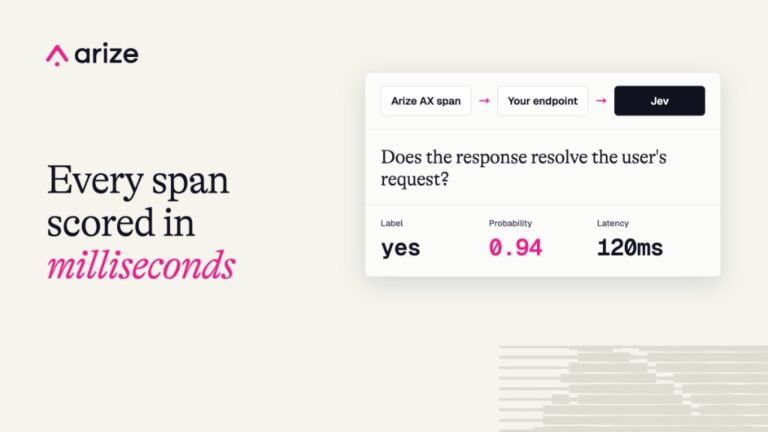
How to build a remote evaluator in Arize AX with Jev
Evaluate agent responses with Jev and Arize AX. Build a FastAPI remote evaluator, return labels and scores, and…
Read the post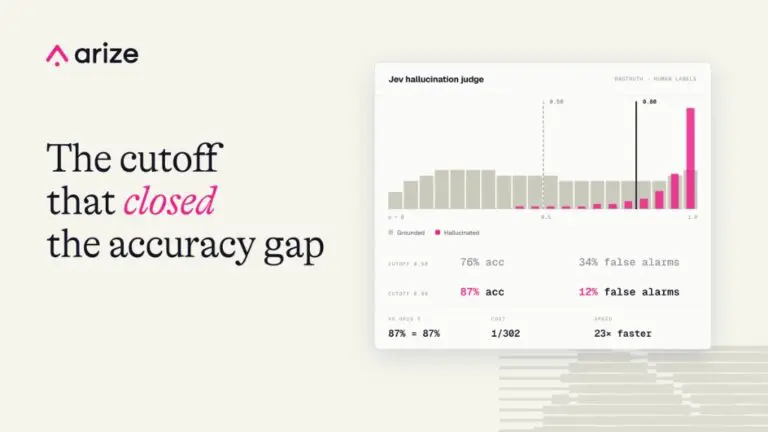
Jev vs. LLM-as-a-Judge: Accuracy and cost benchmarks
We benchmarked Jev against Claude Opus 5 and GPT-5.6 Terra on accuracy, cost, and latency. Learn how threshold…
Read the post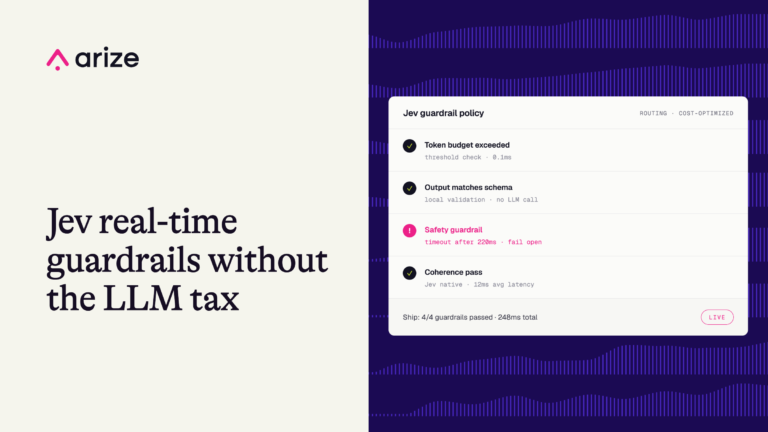
Real-time LLM guardrails with Jev: comparing latency and cost
Compare Jev and GPT-5.4 nano for real-time LLM guardrails, with demo results on latency, cost, and checks on…
Read the post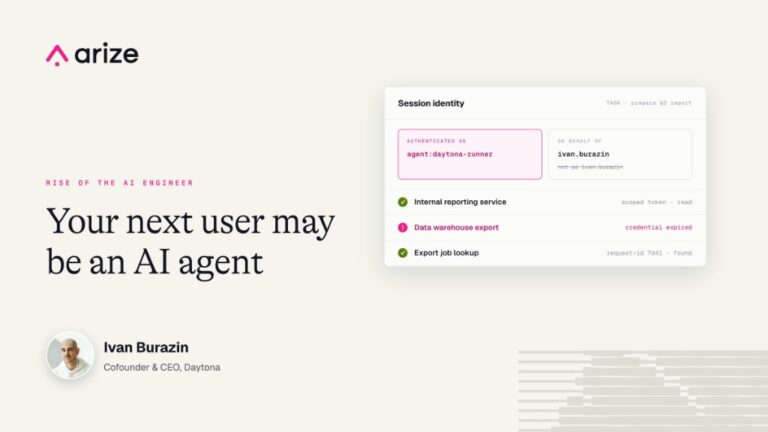
What changes when AI agents use your software
Daytona cofounder Ivan Burazin wants agents that can finish the job within the authority they have been given.…
Read the post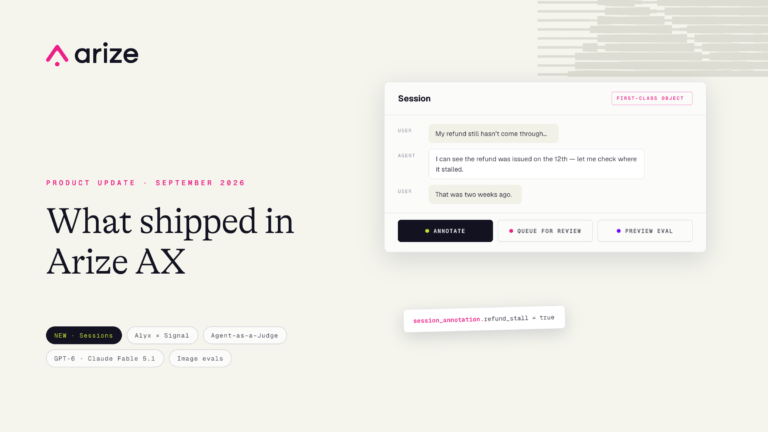
Arize AX in September 2026: first-class sessions, Agent-as-a-Judge, and vision evals
Sessions are now a first-class unit of work in Arize AX. Annotate a whole conversation, queue it for…
Read the post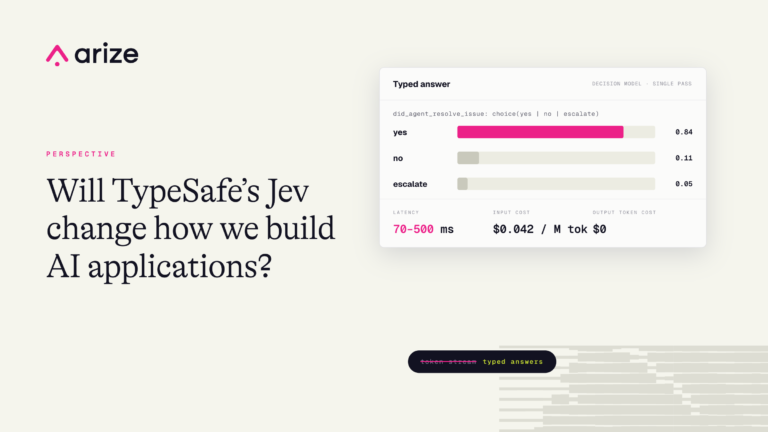
TypeSafe’s Jev: Can decision models replace LLM judges?
TypeSafe’s Jev classifies, scores, and routes without generating text — up to hundreds of times cheaper than an…
Read the post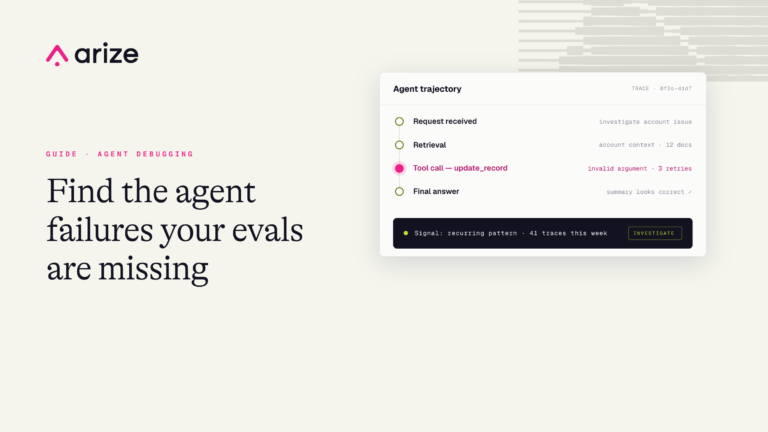
How to find and debug agent failures your evals are missing
Evals measure failures you know how to name. Arize Signal continuously reviews production traces to find recurring trajectory…
Read the post
AI agent regression testing with Agent Experiments in Arize AX
A cancellation-policy fix raised action safety and dropped average task completion from 0.89 to 0.72. This walkthrough shows…
Read the post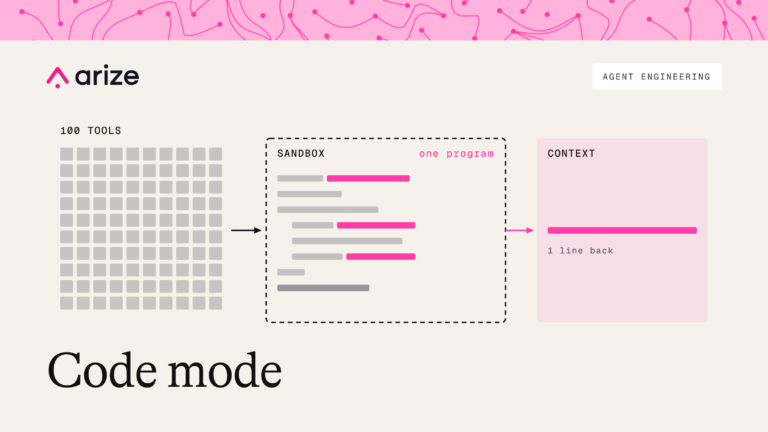
Code mode: Why your agent should code
Code mode gives an agent a sandbox instead of a longer tool list. Here is why it fixes…
Read the post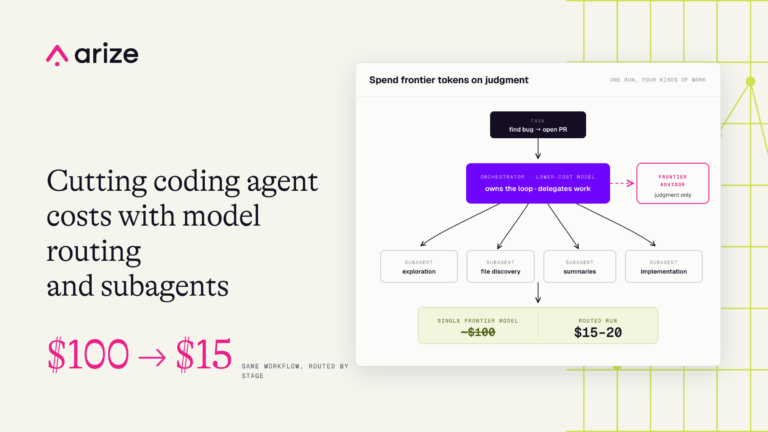
How I cut coding agent costs with model and harness routing
By routing planning, exploration, implementation, and review to different models, I reduced one recurring coding-agent workflow from roughly…
Read the post
How Coinbase Wallet built an agent-first product development lifecycle
By redesigning planning, validation, and risk review around AI agents, Coinbase Wallet dramatically shortened the path from product…
Read the postDon’t ship vibes.
Arize gives AI teams observability and evals to understand and improve agent performance.

