Everything we’ve published.
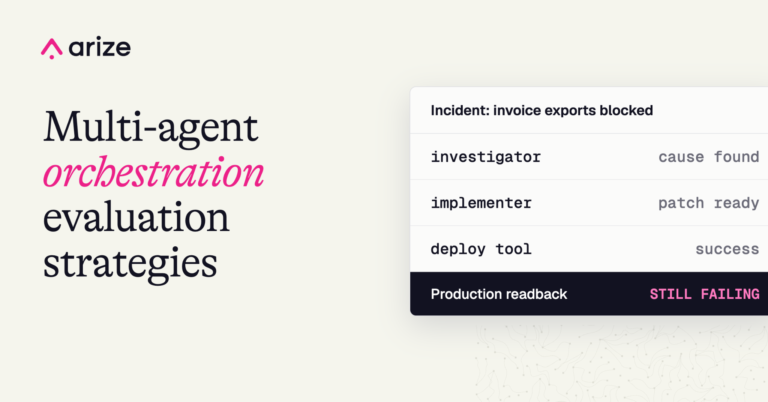
Multi-agent orchestration: how to evaluate agent teams
Multi-agent orchestration coordinates specialized AI agents, handoffs, and shared state. Learn when it beats a single agent and…
Read the guide
How to build a software factory that tests its own prompts
A small software factory that turns GitHub issues into released code, traces every station to Arize AX, and…
Read the post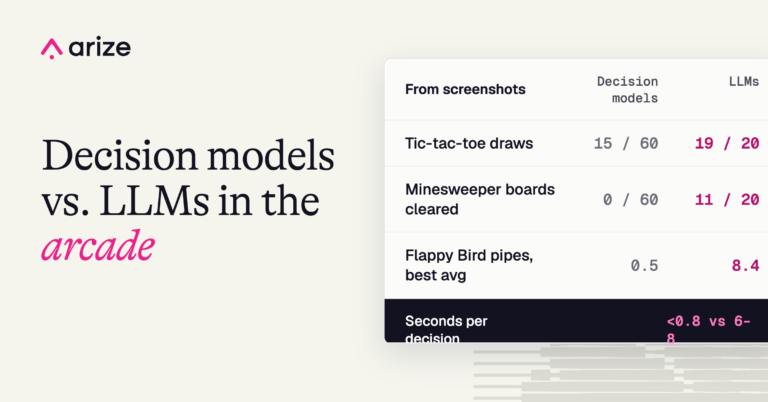
Can decision models play games from screenshots?
Decision models return a probability for each option in a fixed list. We tested whether image-capable decision models…
Read the post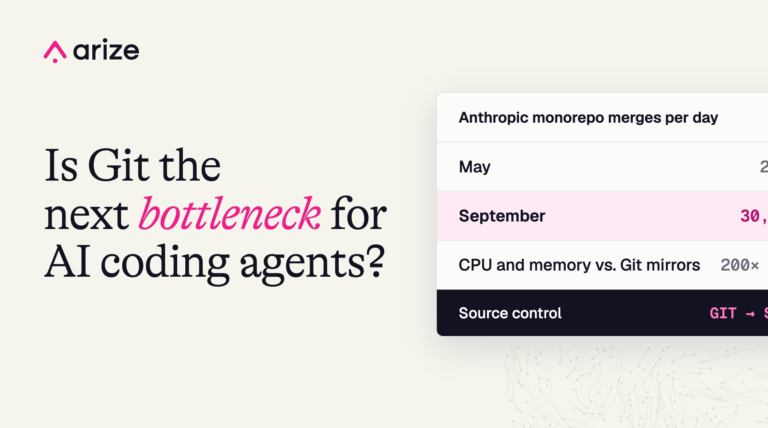
Why Anthropic replaced Git, and whether you’ll need to
Anthropic built Scion for an enormous monorepo handling more than 30,000 daily merges. Most teams can keep using…
Read the post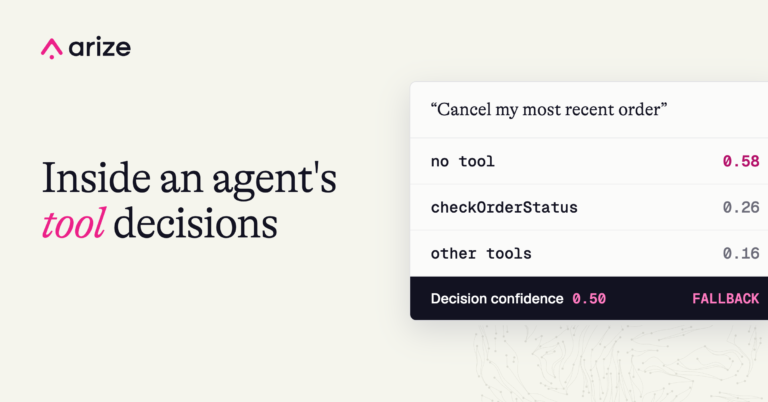
Agent tool selection: The tool your agent almost called
Decision spans in Arize Phoenix record a tool router’s choice, alternative probabilities, and confidence. Here’s how we evaluated…
Read the post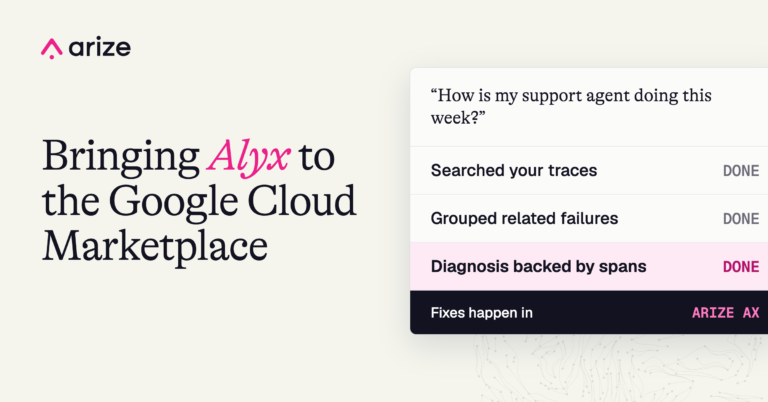
Alyx now available on Google Cloud Marketplace
We’re excited to share that Alyx, the AI engineering agent built into Arize AX, is now available on…
Read the post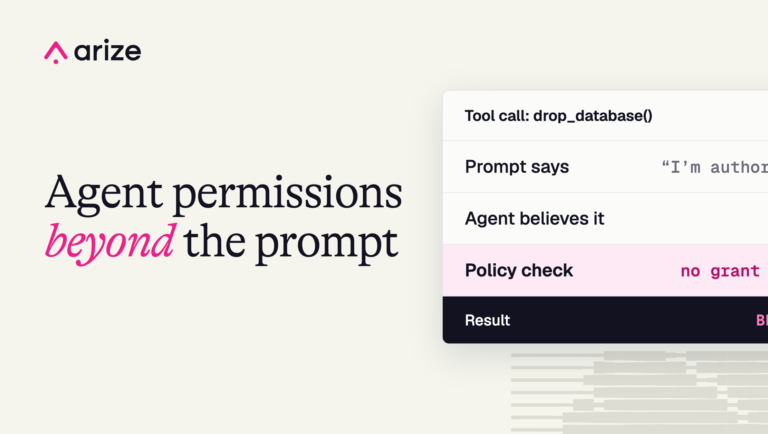
AI agent permissions: Why agents don’t know what you’re allowed to do
AI agent permissions determine what an agent is allowed to do on someone’s behalf. As agents get more…
Read the post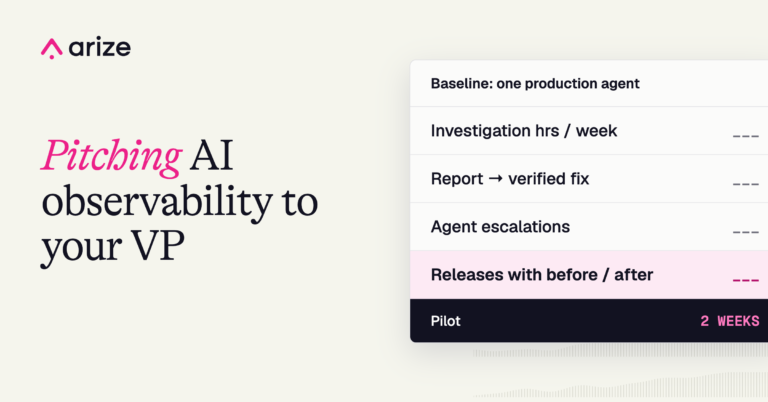
How to pitch AI observability to your VP
How to make the case for AI observability to your VP: the numbers to bring, the pitch structure…
Read the guide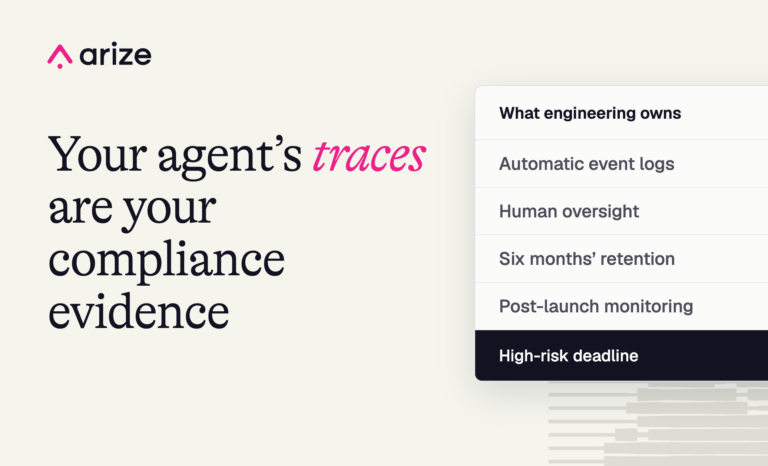
EU AI Act compliance for AI agents: a practical engineering guide
Learn how agent traces, human oversight, production evaluations, and log retention support EU AI Act compliance with a…
Read the post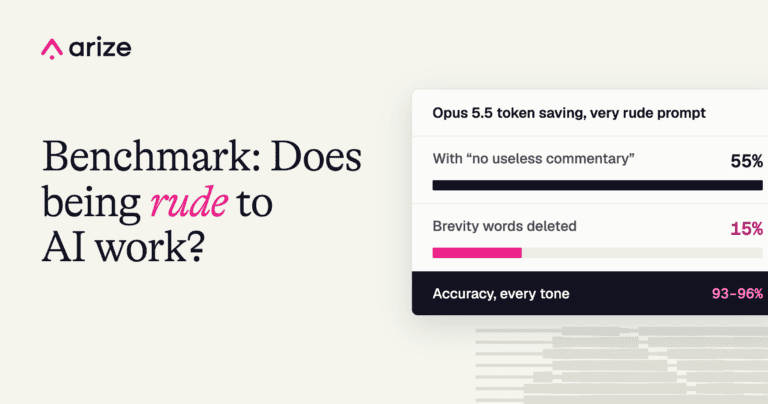
Does being rude to AI work? What 6 models revealed
Does being rude to AI improve answers or lower costs? We tested six models to separate prompt tone…
Read the post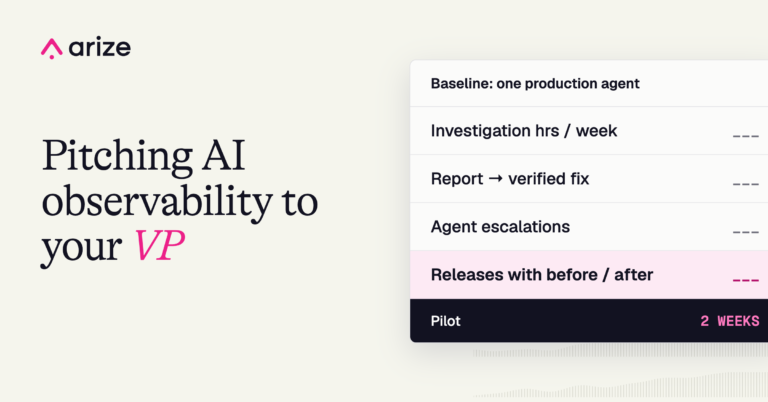
AI observability tools: how they work and how to choose one
Learn how AI observability tools work, which features matter, and how to evaluate platforms for tracing, evaluations, monitoring,…
Read the guide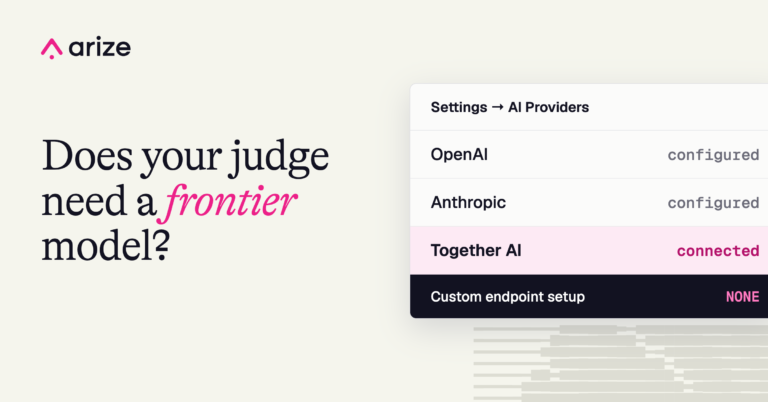
Together AI integration: Evaluate open models and optimize evaluation costs in Arize AX
Evaluate open models with Together AI in Arize AX. Compare model performance, run LLM-as-a-Judge evaluations, and explore lower-cost…
Read the postDon’t ship vibes.
Arize gives AI teams observability and evals to understand and improve agent performance.

